One of the most successful
and important projects of St. Andrew’s Biblical Theological Institute is our
annual Summer Theological Institute. We started it in 1999 in Belarus as a
project to upgrade level of theological education of priests and future priests.
Later we organised it in Kiev, Armenia and St. Petersburg, but the biggest
event was always in Moscow (since 2002) and in Moscow the focus has shifted
from upgrading clerical education to interdisciplinary and ecumenical
education. MSTI is two weeks of very intensive studies with our best professors
and students coming from all over Russia, Ukraine, Belarus and other FSU
countries including Central Asia. Every year we have two groups – one for those
who already have basic theological education and another is more
interdisciplinary with a stress on dialogue.
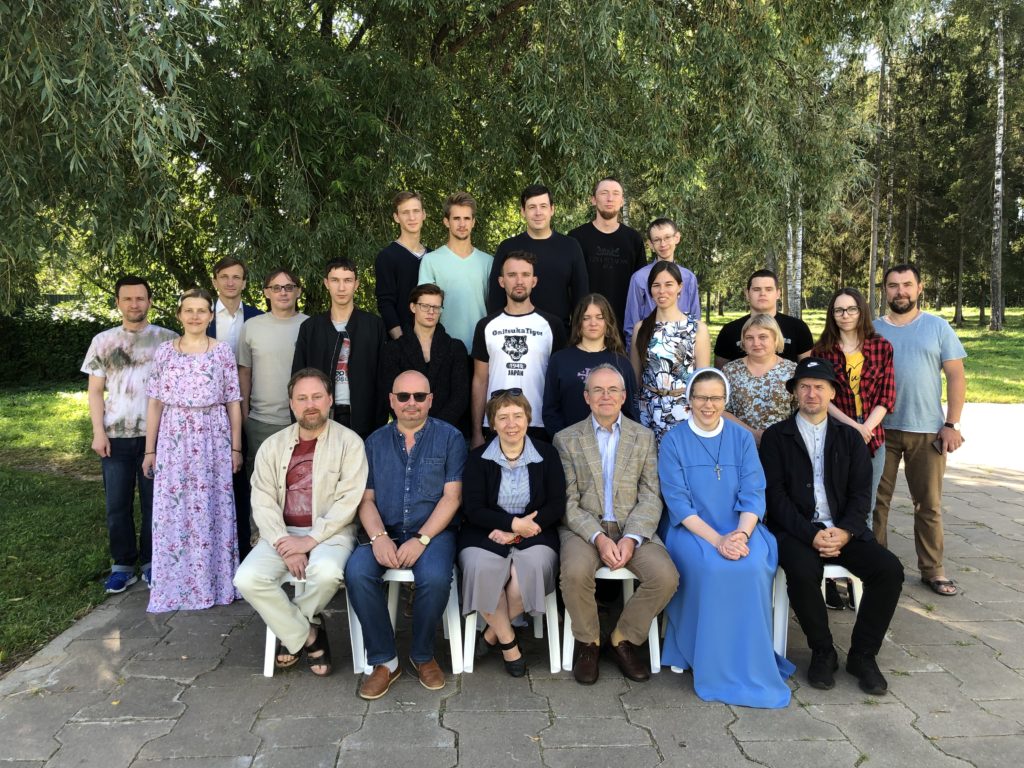
Normally we have 40-50
students and 8 professors. This year due the COVID-19 pandemic we were not sure
how to manage it, postponed it several times and then decided to have both
groups in the end of August but with reduced number of students – only 20 this
year. The enthusiasm of the students was great and it was fit with even greater
enthusiasm of the professors – all of them confessed that these were the first
real students they saw since March when the pandemic started. The courses
included theology of culture, political theology, theology in the postmodern
era, Islam in contemporary world, religion and society, Eastern religions in
contemporary world and many others. Next year in addition to our two groups in
Moscow we hope to organise a summer institute in Grodno, Belarus.
This autumn St. Andrew’s
celebrates its 30th anniversary and despite of the pandemic we plan too jubilee
conferences – Theology of Openness on 6 November and The Person in a Post-Religious
Society on 10-13 December, both in Moscow.
«For
God has not given us the spirit of fear; but of power, and of love, and of a
sound mind.» (2 Timothy 1,7)
Dear members of Oikosnet Europe, dear friends!
First of all I look back gratefully on our
Study day and Business Meeting. I am grateful that the General Assembly has
confirmed me as President of Oikosnet Europe for another three years.
Then I say that we had to have our GA as a
virtual meeting. That was a big limitation. I hope that another time we can
meet again directly and discuss and meet each other in a lively way. This is
indispensable, even though we have discovered new possibilities with zoom
meetings to exchange ideas at short notice.
Covid19 triggers a whole range of feelings:
sad, insecure, alone, lonely, confident, relieved, busy, sceptical, fatalistic,
calm or over-anxious. However we react, there is one thing we have in common:
we become aware of how fragile and precious life, living together, our society
and the global economic system are.
Deep is the Hunger: Meditations for
Apostles of Sensitiveness
In a newsletter from the Retreat and Study
Center Kirkridge in Pensylvania, I found a quote from Howard Thurman. Howard
Thurman, the Pastor of The Church for the Fellowship of all Peoples, was one of
San Francisco’s most sought-after preachers at college chapels. His
contribution to the large audiences he addressed each year across the country
and to his own inter-racial congregation consisted not only of prophetic
quality, but also of an ability to lead a group into an atmosphere of devotion.
«Everybody knows that something has
happened. Just when it happened, no one knows. But there is complete agreement
that somewhere, something very important has given away and all sorts of things
are pulled out of shape, or are sagging or falling apart. The results? Nerves.
There is a sense of fear as of some impending doom around the next turning in
the road. …. Some say we are caught in the open independence of the sea, far
away from any port, and a storm of world revolution is upon us. They point to
breaking up of century-old social patterns all over the world …. This meant and
continues to mean, that no one may claim detachment. The result is deep strains
and stresses in the soul of a people, for which they had no preparation and
from which there seems to be no sure basis for recovery.» («Deep
is the Hunger: Meditations for Apostles of Sensitiveness», 1950).
Jean Richardson, the head of the Center
Kirkridge, quoted this excerpt from Howard Thurman’s book in late June of this
year in connection with “Black live matters” and the new sensitivity
to the still serious racism. Everybody knows that something has happened. And
the sense of fear as of some impending doom around the next turning in the
road, the sense of fear also links people to Covid19 and the unknown that has
gripped our world with this virus – and remembering our Study Day – also with
the seemingly unstoppable climate change.
I guess we should soon talk about a ‘new
fragility’ instead of a ‘new normal’ and decide in Oikosnet Europe on concrete
action. The next few years will show this. But that also means that we have a
lot of work to do. By “us” I mean first of all the Board of Oikosnet
Europe. But it will only succeed in taking concrete and further steps if
Oikosnet gains a new importance among its members. One depends on the other.
But the need to bring our efforts at European level decisively closer together
again is obvious.
There is a saying,
which translated into English sounds something like this: “Extraordinary
circumstances require extraordinary measurements and instruments”. In about 65
years of existence this year’s General Assembly was the first one, which took
place as a virtual Assembly. For many of us this is the “new normal”, for
Oikosnet Europe it was a novum. And it was clear for everyone: a virtual
Assembly cannot replace a person to person encounter. It is, therefore, that we
are looking forward to the next General Assembly in 2021 as a person to person
meeting in Sigtuna or Malta and 2022 in Bad Boll. However, the General Assembly
as a virtual Assembly also offered opportunities, for instance, in that more
members participated due to the fact that they could save money and time for
travelling. The 2020 General Assembly was the most representative since years.
The Oikosnet Board will look carefully on which events are in the future useful
as virtual and/or as person to person events.
Study Day on the Green Deal
The 2020 General
Assembly took place in two parts, a Study Day and a Business Session. The theme
of the Study Day was: “Climate Change and the European Green Deal – The role of
Oikosnet Europe”. We listened to and exchanged with two impressive presentations
from Anja Bakken Riise (Norway) and Sven Giegold (MEP, Germany). Anja Bakken
Riise explained the impressive work of her NGO in Norway, which tries to engage
grass-roots people and civil society in changing peope’s consciousness and
behavior towards the sustainable development goals, Sven Giegold emphasized the
common political work in order to reach the targets. The Green Deal is a major
political step forward on the European Political level, which needs the
involvement of the civil society. Now is the time to develop and review
national action plans and the recovery plans for times during and after the
Corona crisis. A new agricultural policy and green standards in trade
agreements are key at this stage. The discussion centered on the complementary
effects of engaging people in sustainable development issues and on setting
legally binding frameworks on the European as well on the national level.
The Oikosnet Board is
in the process of setting priority issues for its thematic work in a European
framework for its future work. Issues which emerged from the Study Day
certainly belong to the list of priorities. But also other issues were
highlighted, such as: our understanding of education, the future of Europe,
migration, racism … Inputs from Oikosnet members to this debate are welcome.
Elections
As part of the
Business Session, the General Assembly re-elected Walter Lüssi (from
Plusbildung Schweiz) as President for the next three years and Katerina
Karkalla Zorbas from the Orthodox Academy of Crete as a new member of the
Board, equally for three years. Congratulations! The next meeting of the Board
is envisaged for 30 November 2020.
Staff Exchange
Several Oikosnet
members asked as to how Oikosnet Europe could help facilitating an exchange of
staff, may it be for a shorter or a longer period of time. Such an exchange is
to be seen as a process of mutual learning and of bringing Academies close to
each other. Board member Kristin Gudleiksrud Raaum developed a discussion paper
on the issue, which needs to fed with the expectations and needs of potential
participants. The paper can be obtained from the Oikosnet Office in Sigtuna or
from Kristin herself. Again, contributions are welcome.
Budget
The General Assembly
also adopted the accounts for 2019 and the Budget for 2021. It is clear, that
many members of Oikosnet Europe are also suffering under financial constraints
due to the Corona crisis. But is also clear, that the work of Oikosnet Europe
at this stage largely, if not exclusively, depends on membership contributions.
Extra financial support is only acquired for special projects.
Projects
The General Assembly
also received reports from projects like the Arab-European Citizens Dialogue,
Dialogue for a Peaceful Change and the Civil Society Project for Central
Europe. These are summarised in the Annual Report to the Assembly. More
extensive reports are available upon request.
Belarus
Much too little time was left at the end of the General Assembly for listening to the witnesses of our members in Belarus about the situation in their country and their own involvement after the elections. The short reports were impressive. Oikosnet members are involved in supporting victims, in documenting atrocities and in spreading the truth through social media. Oikosnet can be proud of their involvement. As time was too short there will be a special invitation for a longer Zoomconference in October.
Rüdiger Noll, Executive Secretary of Oikosnet Europe
The Board of Oikosnet Europe is looking forward to welcoming you to the GA on 10 and 11 September. We are very much aware, that a virtual GA cannot replace an in-person GA, but paying tribute to the present circumstances, a virtual GA seemed to be the only reasonable possibility. It also opens possibilities: more OE members will be represented and many more staff people from Academies can take part.
The a virtual zoom conference is divided in two parts on 10 and 11 September 2020, from 14h00 to 17h00 on both days. On 10 September the GA will take the form of a study day under the theme: “Climate Change and the European Green Deal – The Role of Oikosnet Europe”. Program
The second part on September 11 will be the Business session. It is only one person per Academy/member organization tha can vote at the few occasions, where votes are constitutionally necessary. All participants, however, must be registered for the GA. Link for registration
In this sense, we are
looking forward to an inspiring General Assembly with a broad participation of
Oikosnet members.
With every good wish, Walter Lüssi, president of Oikosnet Europe an Rudiger Noll Executive Secretary
Ruslan Yarotski , Head of the Leyan Theological Collegium, St. Leonty
Many people around the world question themselves: “What is happening in Belarus?” Our quiet and previously peaceful country has become the object of attention of journalists from all over the world. The reason is the results of the presidential elections held on 9 August 2020 in our country. It is difficult, if not impossible, to call them democratic. Many democratic candidates were imprisoned by trumped-up charges even before the official date of elections. President Alexander Lukashenko, who has ruled over the country for 26 years, has announced his complete victory, allegedly gaining 80,1% of the votes in his support. However, most people in our country did not believe it. It is obvious a very small group of people, if no one at all, voted for him, so how could he get over 80% of the votes? Obviously, people rushed to the streets peacefully protesting against the fraud elections in all major cities and villages of the country.
From August 9 till August 12 the internet service was
largely shut down in Belarus to
keep people ignorant and quiet. Nevertheless, Belarussians
used an encrypted connection
via VPN services to access internet privately and learned about the
election results. Riot police was instructed to brutally suppress any
protests. No one expected such cruelty! In few days, over 7000 people were
detained, severely beaten, intimidated, some of them got shot while
peaceful demonstrations, some died of their injuries, others simply
disappeared. In prisons, people were tortured and humiliated. In response to
this unheard-of brutality and lawlessness, hundreds of thousands of people
gathered in peaceful demonstrations. The authorities were forced to release
most of the detainees, however, many of them are still in hospitals until
today.
Relying on the weaponed forces and
the police, Alexander Lukashenko has kept his power. Now propagandists from
Russian mass-media have arrived to try implementing an information war against
the truth in our country sponsored by our authorities. They do their best to
shape and impose public opinion that there was no torturing or beating of the
civilians in order to convince the world the protesters are a minority
consisted of drug addicts, prostitutes and people who have been paid to
protest.
All the events took place before our
eyes in our native city of Grodno. People were beaten right at the parking lots
near to our temples. The civilians were looking for refuge, hiding from the
police in the church. The steering board of our Theological institute condemns
cruel violence against civilians, torture in prisons, as well as any sort of
manifestation of violence from any side. The bishop of Grodno openly
condemned the violence against civilians in his sermon, for which he has been
severely criticized by the authorities, as well as priests who support the
regime of Alexander Lukashenko. Most part of the leadership and priests of the
Russian Orthodox Church try not to speak publicly about the events in Belarus.
Owing to social media propaganda,
the authorities try to hide facts and make people forget what happened
pretending nothing has happened. It seems many Christians believed this more
than their own eyes and that’s very horrible and frustrating.
We are in desperate need of
world-wide prayer support for healing, unity and peace for our nation from the
Lord. We, as employees of the Theological Collegium, stand for peace to bring
awareness of what’s just happened on the streets of our cities. Our position is
clearly not politically related. We declare the position of the Holy Scriptures
that encourages us not to call evil good and good evil. Isaiah 5:20-21
Ruslan Yarotski , Head of the Leyan Theological Collegium, St. Leonty
Head of the Leyan Theological Collegium, St. Leonty
Walter Lüssi, president of Oikosnet Europe As the Corona Pandemic affects us all in running our Academies and in reflecting on our role in our societies, the Board of Oikosnet Europe invited its members to a virtual Zoom Conference on the Effects of the Corona Pandemic and the role of Academies. This conference took place on June 18, 2020. After one session on general sharing the participants discussed in a session with three parallel thematic workshops:
Workshop 1: Practical issues and experiences with virtual formats: The group stated that in the particular moment of the pandemic it was not quite a choice working with digital resources. As the possibility to meet in person was not given, we need to face digital possibilities as a replacement, but a replacement it remains. The alternative would be do nothing. Starting from this perspective the group analysed how we can use digital possibilities without loosing to much of the spirit our member academies stand for.
Workshop 2: The role of Christian Academies in our societies during and after Corona: Stating that the core foundation of the members of Oikosnet Europe will remain the physical gathering of people once again the group pointed out that Oikosnet offers the opportunity to organize projects and events and to find ways to support them financially. But Oikosnet is what its members are. Only a joint effort will help us to conduct an open, transparent and regular dialogue, as members of the civil society in political, ecclesiastical level etc.
Workshop 3 The new normal for Europe and the role for Oikosnet Europe: The group held a discussion on topics such as Europe and Corona or Education, Culture, system relevance and the Public and discussed concrete issues. One of the main tasks identified was that Oikosnet Europe must first clarify its own definition of education and culture and needs to rethink its definition of academies – to be able to integrate the diversity of educational institutions throughout Europe.
Already the general sharing at the beginning of the Zoom Conference made clear, that the situation is different from country to country and that our members are affected differently by the current situation. The General Assembly will give us the opportunity to discuss this in more detail and reflect on the results and recommendations of the videoconference.
by Dr Kostas Zormpas, General Director of the Orthodox Academy of Crete
One could write a
lot about the Mediterranean! Culture, music, gastronomy, deities… Every summer
we wet our feet in the sea and the water sings -softly- back to us, in order to
overcome the traumatic stresses of the winter. The blue of the Mediterranean
covers our bodies and the sun warms our thoughts and our dreams. On the
contrary, at the same time, the same sea becomes a “grave” for the thousands of
refugees who are lost together with their dreams. The body of the Mediterranean
is plowed by its boats and a new tragedy is ready to come: modern ships are preparing
to rape the Mediterranean, by taking from deep insider the sea, its precious
commodity: the energy!
We have been
living in a geopolitical instability in this region for a long time, which is
slowly becoming more and more dangerous. Turkey’s expansionist tendencies are
disrupting the social cohesion of the region. This tension creates serious problems
for the peaceful coexistence, which concerns the whole Mediterranean, causing
issues to the European and global status quo. This situation is directly
involved with the fossil fuels, and it increases the risk of a major oil spill at
the Mediterranean!
Unfortunately, oil
spills and fossil fuel accidents do happen in a regular basis worldwide and the
consequences to ecosystems and economies can be felt for decades. It was 10
years ago, on April 20, 2010, when an explosion occurred on a drilling platform
in the Gulf of Mexico. According to the Smithsonian Institute, a record
estimate of 3.19 million barrels of oil were spewed into the ocean, before the
leak was capped 87 days after the blowout occurred. That is equivalent to the
volume of over 200 Olympic-sized swimming pools. Imagine if this is a case in the
Mediterranean’s future…
For many years
now, His Beatitude the Ecumenical Patriarch Bartholomaios I. has been taking
important initiatives and action for the protection of the natural environment.
The regions around the Mediterranean, vulnerable to climate change and human
activities, desperately need sustainable and organized political thought.
Prompt solutions and decisions are necessary, in a spirit of reconciliation and
justice. This constitutes a basic element of the work of all Academies, for the
protection of life and the integrity of Creation that is constantly endangered.
Taking into consideration that the word oikos does not only represent a
natural, but also a spiritual reality, it is our duty to protect our right to
live in the OIKOS OF THE MEDITERRANEAN,
learning at the same time to respect the wholeness as well as the holiness of
the world.
Acknowledging the
spiritual and cultural heritage of the Mediterranean and the need for Oikosnet
Europe to raise its voice and to develop common action for the protection of
the region, we propose that Oikosnet Europe adopt a Project for the
Mediterranean, aiming at:
1. The development
of an environmental consciousness, with communicational networking,
organization of seminars, conferences, pedagogical programmes and printed
educational material.
2. The application
of environmental educational programmes and projects to raise awareness in the
religious communities, in schools and NGOs in the respective countries around
the Mediterranean.
3. The development
of an inter-scientific approach regarding the introduction of environmental
education in the official educational system as well as other educational
activities.
4. The promotion
of the dialogue and co-operation between the monotheistic Religions in the
field of the environment.
5. The creation of
a network between the different environmental initiatives and Foundations in
the Mediterranean region.
We hope that will
be an action!
Dr Kostas Zormpas, is the General Director of the Orthodox Academy of Crete
[1] «They call it Mediterranean and naked they
play dark eyed children, bitter statues
it gave birth to the gods, Christ himself summer is not afraid of weather
there, in the Mediterranean…» (George Moustaki).
The Board of Oikosnet
Europe met in two virtual meetings on 25 and 26 May and came to the decision
not to hold the Annual Conference (AC) of Oikosnet Europe in the usual form.
This is a novum in the longstanding history of Oikosnet Europe and a decision,
which was hard to take, but the present circumstances forced the Board to take
such decision.
The Academy of Bad Boll would have still be ready to receive us, but only under severe protection measures, which would have made an AC as we know it with close contacts among the participants almost impossible. In addition, we do not know what the situation in different countries of Oikosnet members and travel conditions will be in September.
Therefore, the Board decided to hold the Annual Conference 2020 as a virtual conference in two parts:
on 10 September from 14.00 to 17.00 designed as a study and discussion day and on on 11 September from 14.00 to 17.00 with important items on the business agenda, such as elections and the future of Oikosnet Europe, its accounts and budgets.
Please save the date and register to the virtual conference of 2020. Documents and links to get access to the meeting will be sent out to you in due time. Do not hesitate to contact the secretariat if you have any questions. office@sigtunastiftelsen.se
As the Corona Pandemic affects us all in running our Academies and in reflecting on our role in our societies, the Board of Oikosnet Europe invites its members to a virtual Zoom conference the 18th of June on how Christian Academies in Europe cope with the Corona Pandemic. The session will have two parts. One session on general sharing and a session with three parallel thematic workshops. Please get in touch with our secretariat and you will recieve an invitation with access coordinates. office@oikosnet.eu
Videoconference on Corona: June 18, 9.00 – 10.30 AM Session with general sharing of experiences
Workshop 1: June 18, 11.00 – 12:30AM Practical issues and experiences with virtual Conference
Workshop 2: June 18, 11.00 – 12:30 AM The role of Christian Academies in our societies during and after Corona
Workshop 3: June, 18 11.00 – 12:-30 The “new normal” for Europe and the role for Oikosnet Europe
Although the situation
is different from country to country, we believe it will profit all to learn
from each other as far as very practical issues are concerned, but also with
regard to our visions and possibilities for the future. Results and recommendations
of this video conference will be taken-up at
the Annual Conference in September.
In any case, we are
looking forward to first hearing from you and later on to seeing you, at least
virtually. Our Executive Secretary is in the process of contacting each of our
members in order to get informed about your situation and in order to evaluate
in which way Oikosnet Europa can be of support.
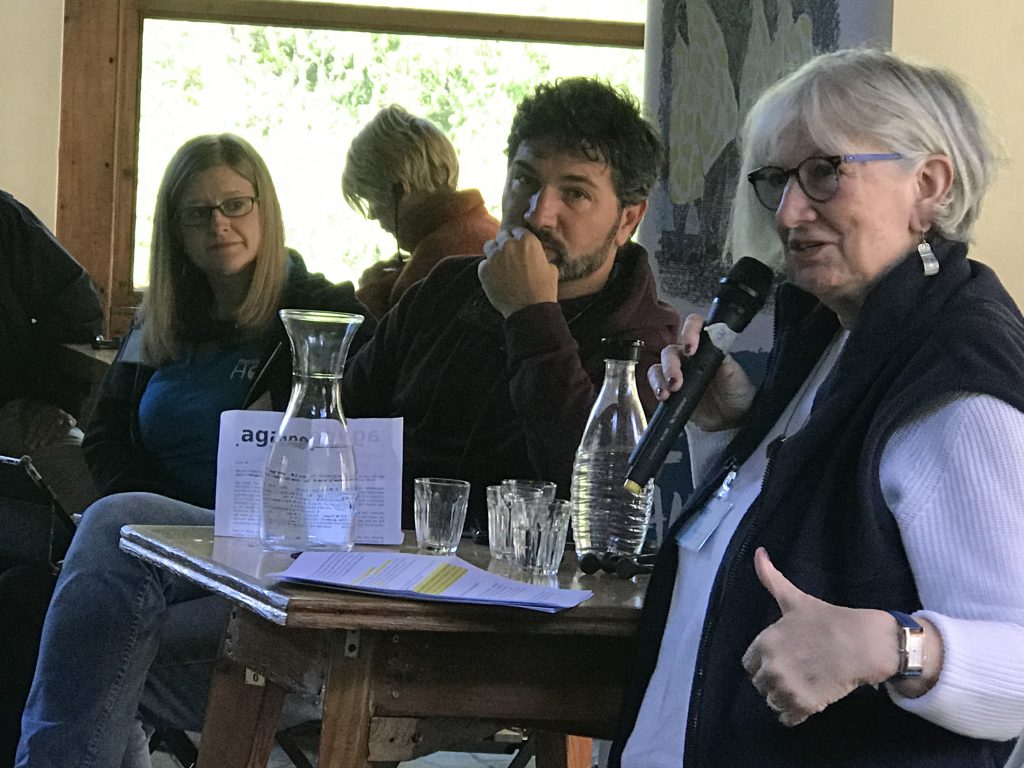
In September, many of or members had some most enjoyable days at the Agape Centro Ecumenico in Italy. Our hosts, Malte Dahme and Sara Marta Rostagno had prepared an excellent program on the themeIdentities moving landscapes: an historical view from the Alps where the Waldensian valley and it´s history became an inspiring resource for reflection on the question of migration in general.
Welcoming of new members During the Business Meeting we had the pleasure of welcoming a new member of Oikosnet Europe, The The Orthodox Grodno Laity Center in Belarus. We all look forward to hear more about their centre and their work in the future. Jörg Hübner, director at the Academy of Bad Boll, Germany, was elected as a new member of the board. Many of you have probably met him at earlier Annual conferences and you will definetely have the possibility to make the acquaintance at the Annual Conference next year, as it will take place at Bad Boll.
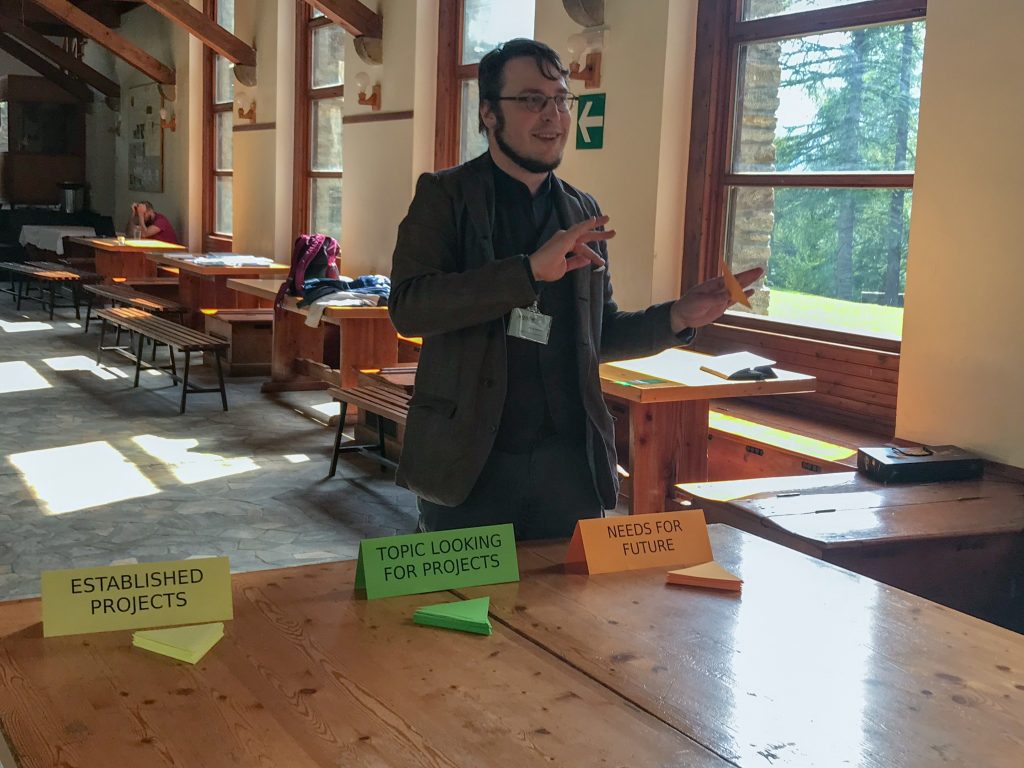
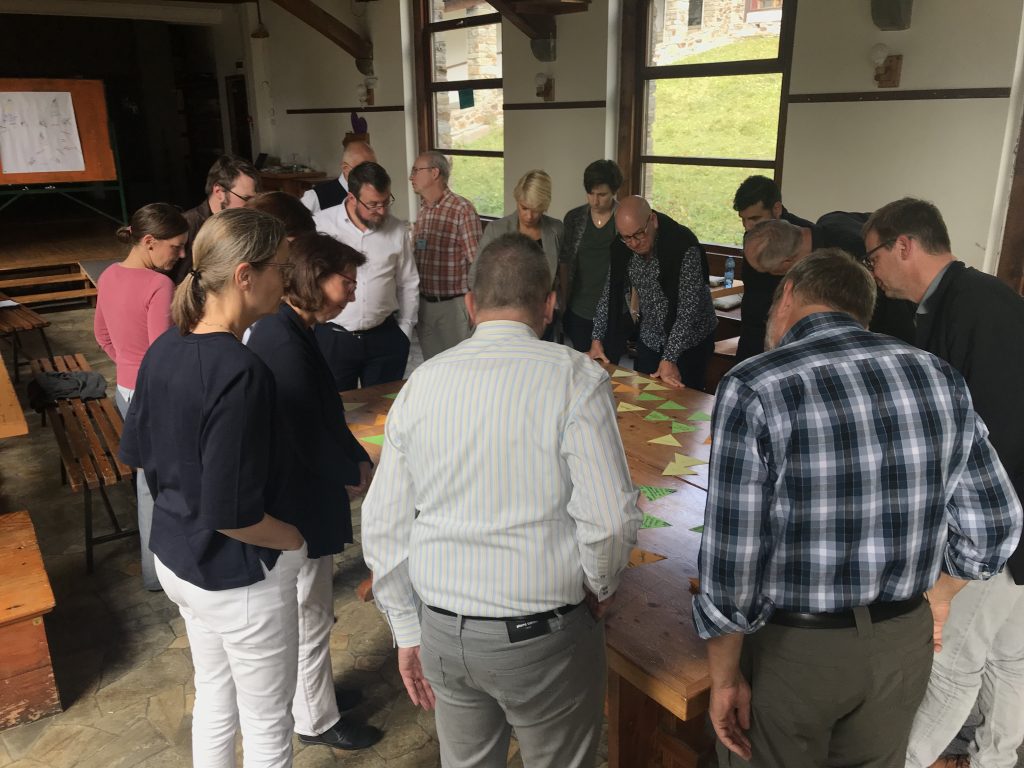
Ideas become projects One of the most aprreciated part of the Annual Conferences are the exchange of ideas. On the last day of the conference Malte Dahme facilitated a most fruitful workshop where members could partner up around common projects. It was very inspiring to see how many ideas became more concrete during the session and the board are already working on how to develop them further. A more detailed information from the Business meeting is presented in the minutes and we yet again want to thank Sara Marta Rostagno and Malte Dahme and all their staff for their wonderful hospitality.