Congratulations Kristin Gunleiksrud Raaum

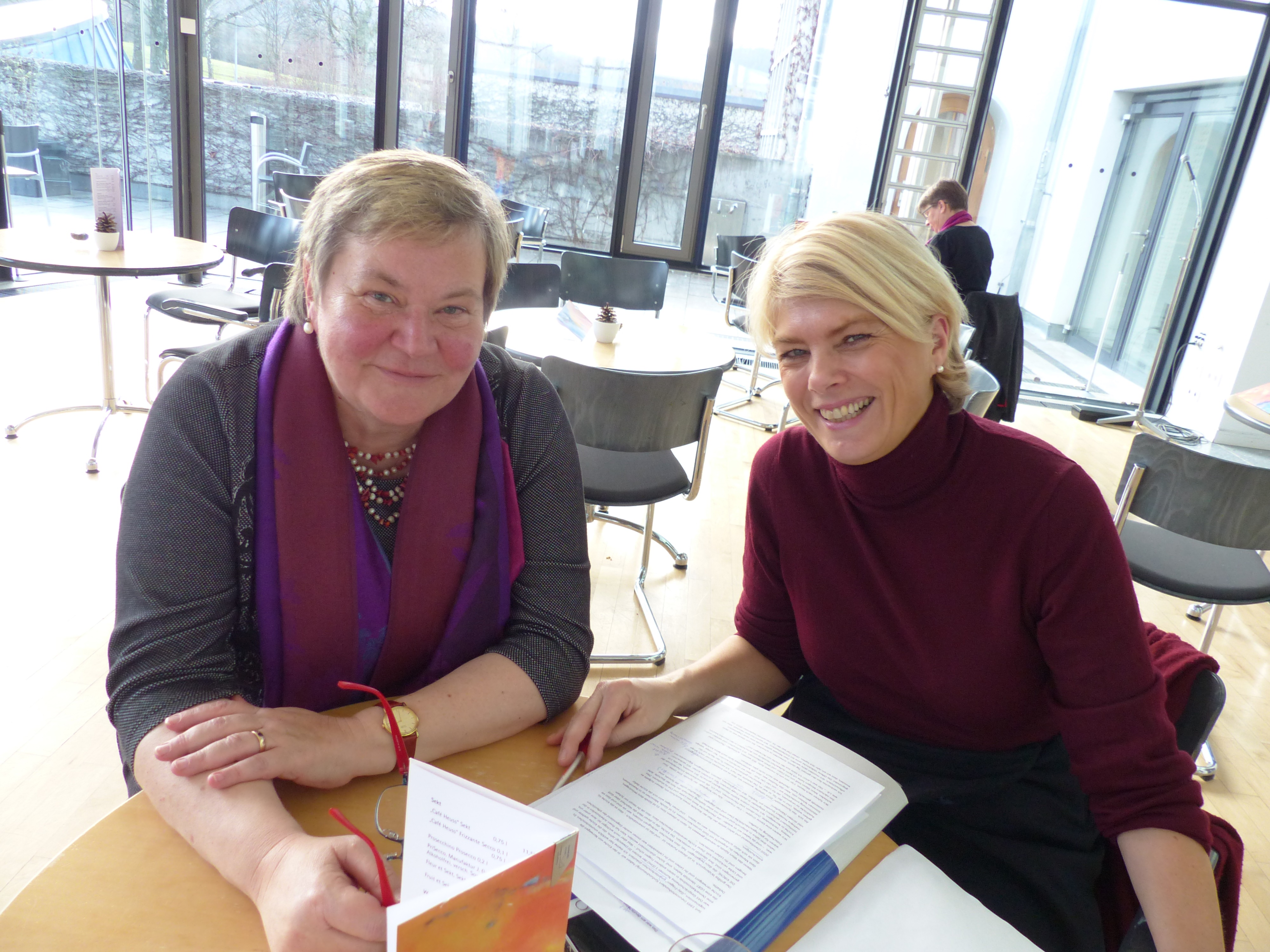
Marielisa von Thadden and Kristin Gunleiksrud RaaumOn behalf of Oikosnet Europe we give our warmest congratulations to Kristin Gunleiksrud Raaum from the Norwegian Church Academy who recently was elected as Chair of the Church of Norway. Many of us have met Kristin at the annual conferences of Oikosnet Europe and she was also elected as member of the board in 2015.

In December Kristin visited the Evangelische Akademie Bad Boll at the annual conference for Lesbian Women in Church and Society. Her speech was very well received by around 100 participants coming from all over Germany. We wish Kristin the very best in her new challenge as Chair of the Church of Norway and we are grateful that we have her permission to publish her speach from the conference.

Photo: Marielisa von Thadden,  Evangelische Akademie Bad Boll and Kristin Gunleiksrud Raaum  the Norwegian Church Academy.

Key note speach by Kristin Gunleiksrud Raaum at the annual conference for Lesbian Women in Church and Society

“I am delighted to be here, and to be invited to tell you about an amazing process I have been part of the last year and a half. We are now changing the church of Norway, within a little bit more than a year it will be possible for same sex couples to be married in the church. But this is not really about an organization. It is not really about the church. It is really about human dignity and equality, and the members of the church being given an opportunity to speak their mind.
First a few facts:
In Norway, we used to have a State church until 2012. 75 % of the population are members, but the numbers are slowly decreasing. Our Constitution now uses the term «Peoples church» about the Church of Norway. We now discuss how we can prevent a similar increase in child christening and church wedding, as is the picture in many other north European countries.
In 1992 there was an act of Domestic partnership. The majority of church leaders were against this.
January 1st 2009 there was a new legislation of marriage in Norway. The Marriage Act states that two people of the same or different sex can get married. But not in the church. There is a section in the Marriage Act that prevents a priest from performing a marriage between two of same sex.
As in most churches, LGBTs have been the topic of debate also in the Church of Norway. Could they be employed as priest? Could they “be allowed” to marry? I have to say that I really do not recognize that we as a church should be discussing this for years and years. I understand that we have to, but I long for the day when this is no longer a topic: it is and should be self-evident that we are equal, also when it comes to the ability to love.
There are some who claim that homosexuality is a sin. And they are letting their voices be heard. In newspapers and social media they are active. They are of course few in numbers, but they organize well, and have been able to win disproportionally many seats in the church parliament, the synod.
We on the more liberal part of the church, traditionally lack the ability to organize or unify. We find it much more interesting to discuss or even fight one another. So, when it comes to seizing power in the church, we have been an east match!
In the Church of Norway we have been constantly discussing so called “gay issues” since 1995. And I mean constantly. It has been THE issue in 20 years, dividing the church, and creating a demarcation line in many other questions. But more importantly: in these 20 years those of us with LGBT-identity have been exposed to discrimination, being refused jobs in the church, and having their lives and love discussed in the open over and over again. The great paradox of it all – and this is impossible to understand – is that the church, THE CHURCH, has contributed to making people lie about who they are, hide who they are. The church, in this world to proclaim the truth about God and love. The church has made people bow their head in shame and hide their life. If the word sin ever was a
relevant one, it is in this sense: it is a sin to contribute to people hiding their face before God. It is a sin to make people feel ashamed of whom they love. And one day the church will apologize for it.
Well, in 2010 the Bishops Council appointed a group with the task to – once again – study the theological basis of love and marriage. It took three years, and ended in a divided bishops council. 8 were pro same sex marriage, and four were against. Then it was up to the synod to decide.
We were a small group. Four women. All member of the synod. One lesbian. Three straight allies. Three of them priests. And me, the deputy leader of the Church of Norway. We did our math. We knew where all 116 delegates stood in the issue. We wrote articles. We spend hundreds of hours on the phone. Investigating, mapping, persuading, arguing, fighting.
When the synod in 2014 approached, we knew that it would be a close race. And it certainly was. The debate was tough. I will try to forget some of the expressions used of LGBT’s. The night before the votes were to be given, we discovered – four o’clock in the morning – that we would not make it. We were a few votes short. But the upside of it was that the conservative side did not have a majority either. So it was not over.
We drove home. Four of us in my car. Crying. Swearing. Sleeping. My husband welcomed us with dinner and wine. We went on swearing and crying. The next morning I woke up to hundreds of messages in social media: «This is it! I’m leaving the church of Norway.»
I spend most of the day answering, and by the night it was obvious: We had to do something about it. Two months later a new organization was founded: Open People’s church. We were only a handful. But we knew that we had a year. September 14th 2015 was oar goal: a church referendum. The new synod, consisting of 11 diocesan council (116 members in all) should be elected. Only 10-13 % of the church members voted. We organized every diocese, and, for the first time in history
established lists, similar to party lists. We achieved lists in 9 out 11 dioceses.
We were in it together. Queer and straight. LGBT and heterosexuals. Not always easy. I find it sometimes hard, being straight and credible at the same time. It was sometimes hard, knowing that everything I said could be mistrusted because I happened to be straight. But through this frustration, I think I learned a lesson. I learned a little of what it is like to be mistrusted because you are who you are, ore more precise: because of whom you love. What it is like having to fight for a job or the right to love in dignity. I had never before have had to fight for respect because of who I was. I have met prejudice and harsh remarks because of my high heels and blond hair and passion for champagne. But that is nothing in comparisn, and I know it. I now had to try to understand when my heteronormativity made me blind or nearsighted. It was a valuable lesson.
We campaigned on. We had no money. Everything had to be done on a voluntarily basis. It was really an impossible project. To establish a nationwide organization within a year, and then have a campaign all over the country to win the referendum. We had groups on Facebook. Open groups, secret groups. There is I a lot of bad things to be said on Facebook, But without it we would never have won. We had secret strategy discussions, providing those new in our organization with support and arguments for local debates. We grew. Some of us worked in publicity, they made a visual program. Part of it you can see behind me. One contacted famous artists who supported us. They made a record: working for an open church. And a wonderful concert. Many of the best artists in Norway together on stage. It was magic. Then we went begging for money from a few of the richest people in Norway. One of them said yes. And gave us 200 000 euros. This is a very private man, who
seldom gives interviews. But now he gave three interviews on the news, telling the whole of Norway that he supported us because he was a Christian (no one knew in advance) and he felt obliged from the gospel of Jesus. Two month later he came out of the closet as bisexual, and what was really interesting is that this strengthened his credibility. Being LGBT made him popular. The fact that he supported us made him popular.
We toured the country with the campaign.
What I want to accentuate from the campaign is this: Travelling around and meeting people, it became clearer and clearer how important this was to many ordinary church member, LGBT or straight. There was a lot of people in many ways saying: FINALLY! The fact that you decided to run an Open Peoples Church list, made me breathe more freely.
This was markedly and most clear in the part of the country that traditionally was dominated by the conservative forces in the church, in the south and the west of Norway. In these regions people said: “Now I can state my mind more freely. I do not need to hide who I am anymore!” This was of course a strong message from LGBTs, but also from straight people. It was as we all grasped that a church that does not recognize some people, does not recognize anyone. A church that condemns love and marriage for some, does not does not really recognize love. A lot of people expressed what I would call lack of oxygen in their relation to the church.
What was on stake was partly the credibility of the church, but most importantly: It had to do with the image of God and the dignity of man. The shared dignity. If the church cannot be the place that this is self-evident, where can it? one said to me.
Because we have changed as people, as a society, as Christians. We want a church that enhances and promotes that we should support our children in finding their identity, living openly and honestly, rather than sorting them in rigid and limiting Categories. We do not want a church that make life difficult for people.
I think our campaign proved that there among the people is a stubborn faith that has survived the shallow preaching of human love.
And how did it all go? We won. Almost 65 percent of the votes. We won in ALL the dioceses. Even the most conservative. We now have the majority in the synod. And by January 2017 it will be possible for same sex couples to marry in the church. We have started developing a new liturgy. I am so proud to have been given the privilege to be a part of this. To change the church. To change the conditions for life and love. And faith.
There is opposition of course. The battle is not over, of course it is not. We are still fighting and arguing. But the majority has changed. The church has changed. Because the church members said: we cannot have a church who divides people, who discriminates people. We want a church that promotes the gospel, and therefore human dignity. We won because the members of the church of Norway gave a strong message of equality and dignity for all.”
.
Europe – From Crisis to Turmoil

Europe – From Crisis to Turmoil

When the Annual Conference of Oikosnet Europe met in Villigst in September 2014 and had “Europe” as its main theme, the focus was on giving “new impulses for the European integration process” as Prof. Jörn Rüsen put it during the meeting. Already at that time Europe was perceived as being in a crisis.

Much has happened in the meantime, much has happened in recent weeks and months. The number of refugees seeking asylum in the Schengen territory has reached unprecedented high figures – and each single refugee has his or her individual story and reasons to leave his or her homeland. Public authorities in many European countries feel totally overwhelmed in offering a welcoming environment and in offering social and health services. Many civil society initiatives, including church-related initiatives, step in and thereby setting countersigns to those who are engaging in hostile acts against foreigners.

With the terrorist attacks in Paris on 13 November terrorism in Europe has reached a new dimension. In as much as comparisons never do justice to the victims, some newspapers have titled: “Europe is facing its 9/11”. Consequently, the debate “security” versus “freedom rights” is reaching a new climax. First and foremost, however, preventing and combatting intolerance and fundamentalism as well as promoting mutual respect and conviviality in increasingly pluralist societies are demanded. Again an area where the engagement of civil society and the role citizens’ education is indispensable.

Both of these recent developments encouraged the Oikosnet Board to issue a public statement  – the first since a very long time. The statement recognizes the commitment and active engagement of many Oikosnet members on these issues and encourages them to remain actively engaged.

Statement Oikosnet 

The refugee crisis and the terrorist attacks should not be mixed up – as sometimes done by populist speakers and movements. As investigations on the terrorist atrocities in Europe have shown thus far, the attackers were either European citizens or entered the continent on other paths. Refugees are not responsible for terroristic attacks in Europe. They are the victims of terroristic attacks and failing governmental policies in their home countries. They need protection. The right to asylum is not to be put in question.

And Europe? Both of the recent developments show very clearly that a common European response is needed. No single European country is able to handle the amount of refugees nor the threat through terroristic acts on its own. The European Union is an important player in this regard, but a common response must also include countries like Russia and Turkey and it must be informed by the neighbours in the Middle East.

For many Christians as well as in the logic of military conflicts, common European airstrikes in Iraq and Syria will not be the solution. UN programmes and countries in and around conflict zones, where still most of the refugees live in camps and often under inhuman conditions, must be resourced and equipped in order to be able to help people effectively. Channels which feed terrorists with finances, resources and weapons must be cut. A more effective EU Neighbourhood Policy with its eastern European and Mediterranean neighbours, at present under revision, is needed, including a strengthened civil society dialogue. In this, Oikosnet members, being committed to the Christian faith as well as to human rights and human dignity, have played and will play their role.

The 2015 Annual Conference of Oikosnet Europe addressing the issue of “Fear” and “Remembrance” exemplified by the example of (Northern) Ireland and the work of the Corrymeela Community as well as by the training which Oikosnet offers under the name of “Dialogue for Peaceful Change” how important it is to have intermediate an unbiased institutions. These can help for people to share their “stories” with each other in a local, national or international context. “Only if narratives get changed, there is a real possibility for making a difference,” was one of the sentences participants took home from Corrymeela.

Rüdiger Noll, Executive Secretary of Oikosnet Europe

ruediger_noll1


Workshops in Iconography at the Orthodox Academy of Crete

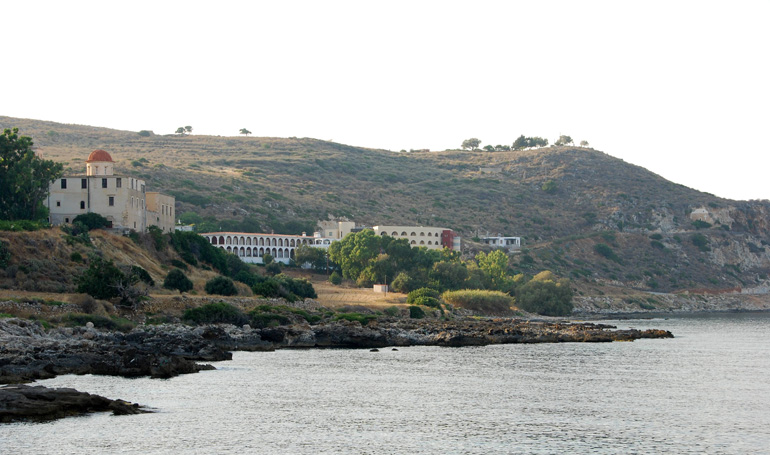
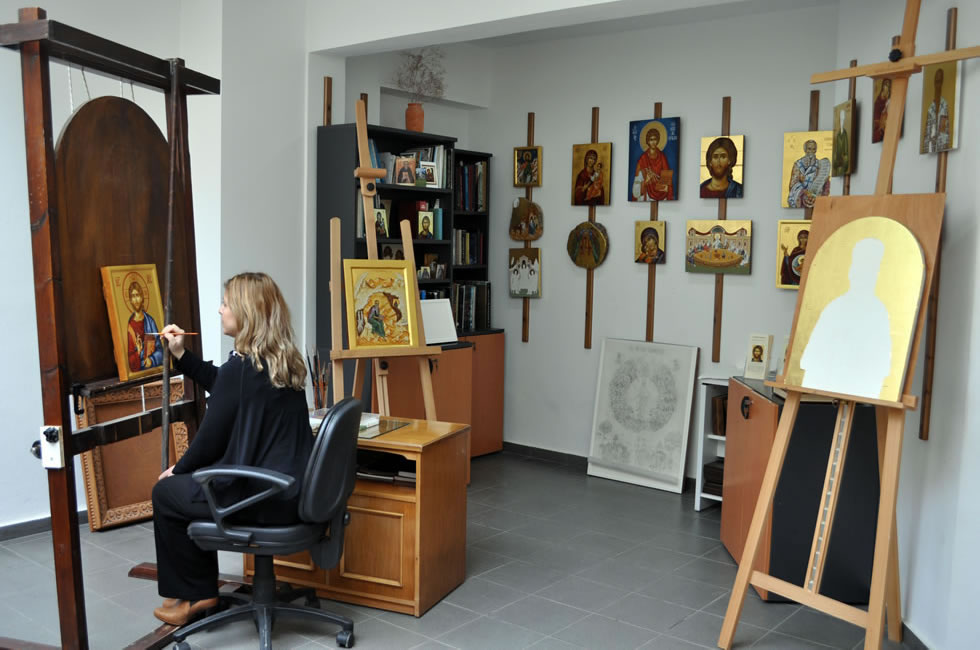
Iconographhy2Since 1995, the Iconography Workshop of the Orthodox Academy of Crete (OAC) cultivates the Byzantine art through the painting of icons and also by informing groups visiting the OAC on iconography. The Workshop provide iconography seminars to groups and to individuals from Greece and abroad. These seminars aim at offering a general orientation and acquaintance with Byzantine art. The main emphasis lies on the portable icon painting. The participants will learn and practice the techniques that are being applied during the different phases of its creation.

Parallel to the practical section of their training, the participants get information on the theoretical framework of Byzantine iconography.  The OAC scientific advisors deliver lectures on the theology of icons and the history of iconography. During the courses, the participants will visit places directly connected to the hagiographic tradition of the Orthodox Church, as it was experienced in the island of Crete. They have the opportunity to admire and study masterpieces of Byzantine and post-Byzantine art; many of them are to be found in their ‘natural place‘, in the churches and the monasteries. The participants stay at the OAC and taste the traditional Cretan cuisine. At the end of the courses, the participants receive a certificate from the OAC confirming their participation.

Dates of the iconography seminars

For beginners  
17 – 28 March  2016
Registration Deadline until 30th of January 2016

For advanced
10 – 21 April 2016         Registration Deadline until 28th of February 2016
17- 27 October 2016     Registration Deadline until 30th of June 2016

For further information and registration please get in contact with Konstantina Stefanaki, Iconographer of the OAC Orthodox Academy of Crete 73006  Kolympari – Chania, Crete,
Tel.: +30-28240-22245, Fax: +30-28240-22060

E-mail: ksoac@otenet.gr ,   Website: www.oac.gr

The Arab-European Citizens’ Dialogue

OACThe Arab-European Citizens’ Dialogue continues. The 5th Consultation, under the title “Societies in Transition: Active Citizenship – Where can it make a difference?” is scheduled to take place in the Orthodox Academy of Crete, Kolympari (near the city of Chania) from Wednesday to Saturday, 9- 12 March 2016.

The 5th Dialogue Conference is organized jointly by the Coptic Evangelical Organization for Social Services (CEOSS), Oikosnet Europe, the Sigtuna Foundation and the Orthodox Academy of Crete. After the last Dialogue Conference in Brussels (November 2014), the Arab-European Citizens’ Dialogue has gone through a period of reflection and restructuring. Recent events, both in Europe and in the Arab world, vividly illustrate the need to continue this dialogue.

It is now Oikosnet Europe, the Ecumenical Association of Academies and Laity Training Centres in Europe, which has become the European partner for CEOSS. A concept note for the Dialogue has been drafted and is still under discussion. In addition, a new International Steering Committee has been established.

A pre-invitation will be distributed shortly to all those who have been part of, or expressed interest in, this dialogue. For more information about this project in general, contact Rüdiger Noll (rudiger@rudigernoll.eu) or Alf Linderman (alf.linderman@sigtunastiftelsen.se). For more information about the Crete event in March next year, contact Katerina Karkala Zormpas (kkarkala@yahoo.com).


Eastern and central Europe Consulting

23nd – 25th of February Liebrauenberg / France

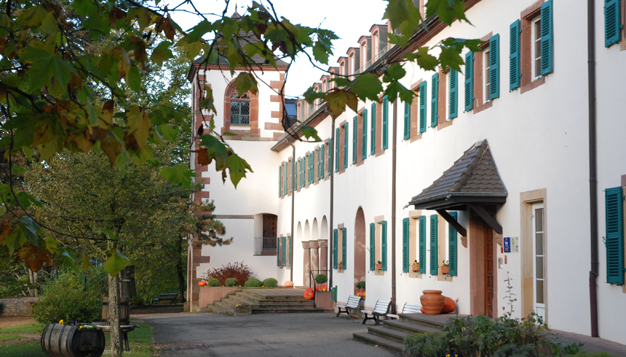
LiebrafauenbergAs announced in the last Newsletter the Eastern and Central Europe Consulting will take place from Tuesday the 23rd to Thursday the 25th February at the Liebfrauenberg in France.

The preparation team with Sören Lenz, Rüdiger Noll and Jiri Silny are in contact with all our members in Central and Eastern Europe. The aim of this consultation is reactivation and motivation of our members in Central and Eastern Europe (including our Greek members) as well as to encourage ecumenical dialogue and exchange.

This meeting is not exclusively and Western member centres are welcome to take part in this consulting (one or two day participation is possible).

The programme will be organised in consideration of the issues and themes proposed by the participants and will be completed by key note speakers.

Attention :

The consulting will start on Tuesday with lunch and end on Thursday afternoon, the details will be given several weeks before.

For more details and practical information please contact Sören Lenz slenz@liebfrauenberg.com.


The Reformation Anniversary 2017

Possibility for Oikosnet members to become a part of the World Exhibition

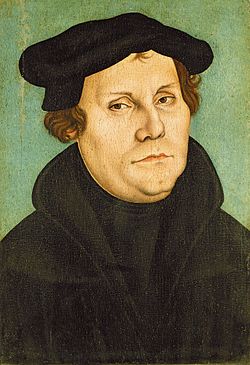
Lucas_Cranach_d.Ä._(Werkst.)_-_Porträt_des_Martin_Luther_(Lutherhaus_Wittenberg)Preparations for the 500th Reformation Anniversary in 2017 are in full swing. The Anniversary 2017 relates to the publication of Luthers’ 95 thesis in Wittenberg in 1517. However, the Protestant Church(es) in Germany is/are quite aware that the Reformation in the 16th century was a development with a European, if not global dimension, with, for instance, antecendents in the Hussite or Waldensian Church.
As Friedrich Kramer, the Director of the Protestant Academy in Wittenberg/Germany , explained at the last Annual Conference of Oikosnet Europe, in 2017, from March to September/October, the Academy in Wittenberg will become part of the World Exhibition at the occasion of the Reformation Anniversary. This will open possibilities for the German Academies as well as for Oikosnet Europe members to participate in the programme, to contribute to the programme and to jointly present themselves. Oikosnet members, who are interested in participating are invited to get in touch with the Protestant Academy in Wittenberg  info@evangelische-akademie-wittenberg.de  or with the Oikosnet Executive Secretary.


Nicola Murray – new treasurer of Oikosnet Europe

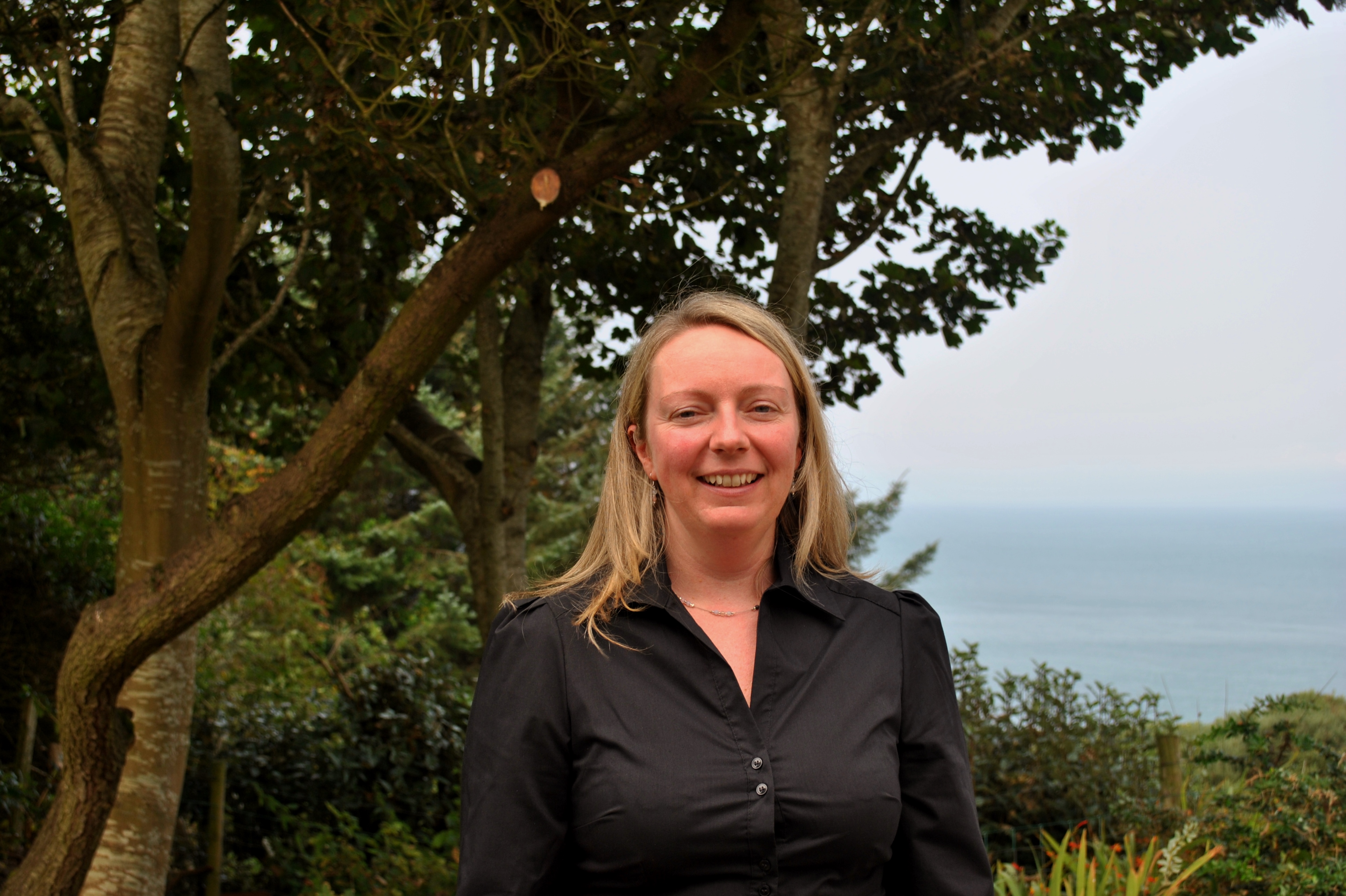
Nicola MurrayAt the  boardmeeting in September, Nicola Murray, Head of Finance and Business Development for The Corrymeela Community, was elected as the new treasurer of Oikosnet Europe. Nicola is a qualified Chartered Management Accountant, a member of the Management Team, and responsible for all things that have a financial or commercial impact on Corrymeela.

– I am delighted to be involved with Oikosnet Europe whose mission and vision is in line with the reconciliation, peace-building and healing of social, religious and political divisions of Corrymeela.  I am thrilled to have been appointed Treasurer with Oikosnet Europe and hope my skills will be of use to support the Board into the future.

Nicola Murray replaces the Kostas Zorbas as treasurer. Kostas Zorbas was reelected as member of the board.

Visions for the future, Sigtuna May 18th – May 21st

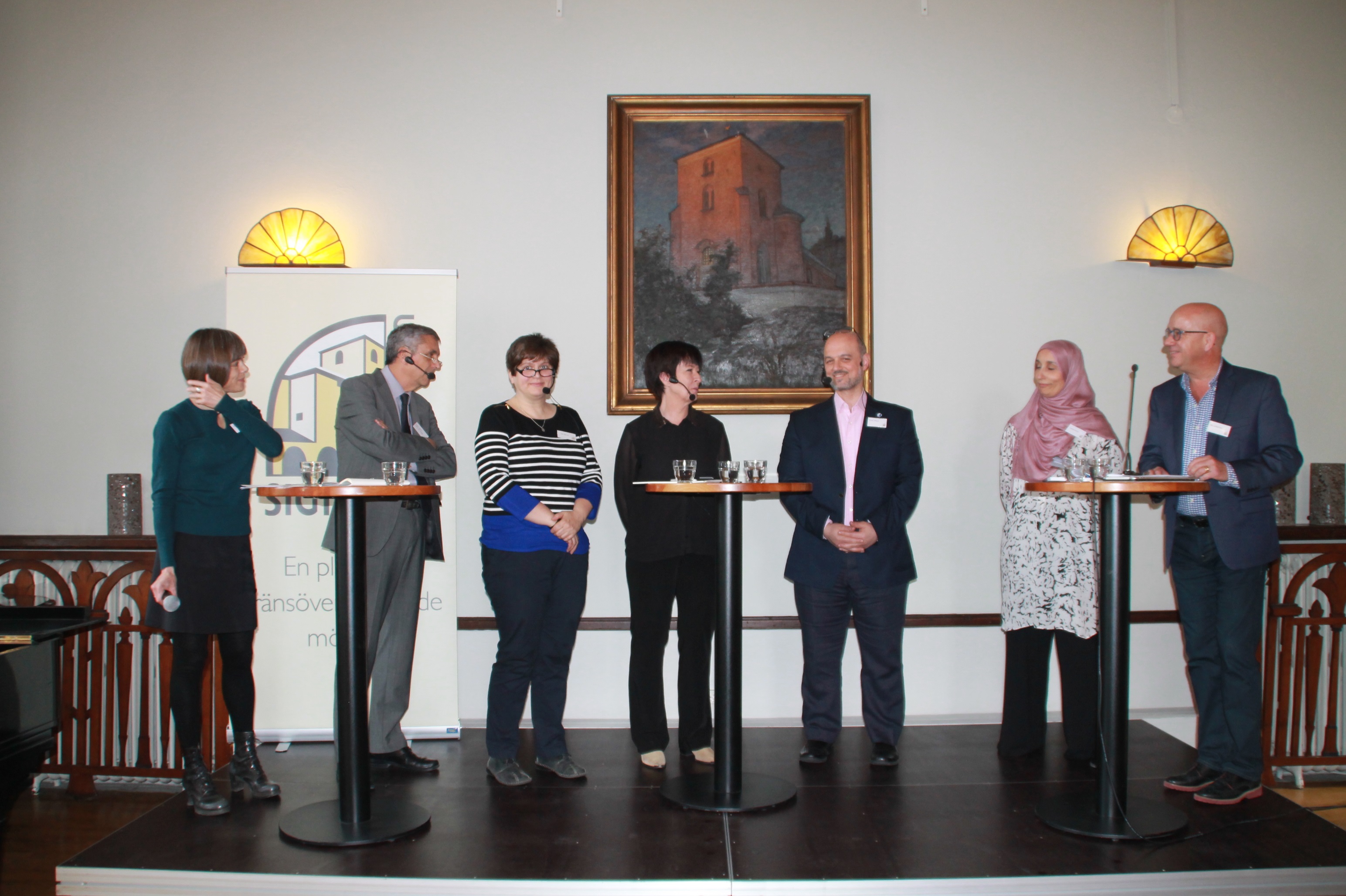
Paneldebatt Sigtunastiftelsen1 Cultural identity, democracy and peace was the main theme of the confence in Sigtuna , arranged by the Sigtuna Foundation in cooperation with Oikosnet Europe, Riseci, The Swedish Christian Council and the Swedish Muslim Council. The program started out with a dialogue between Anas Altikriti, Founder and president of the Cordoba Foundation in the UK, Ute Steyer, Rabbi of the Jewish Community in Stockholm, Josep-Maria Carbonell, Dean at the Blanquerna School of Communications and International Relations at Ramon Llull University in Barcelona,  Mia Lövheim, Professor in the Sociology of religion at Uppsala University and Mona Sahlin, National Coordinator against violent extremism and previous leader of the Swedish Social Democratic Party. Coming from different religous backgrounds and different cultural contexts the speeches given really shed some light on the challenge of having an open dialogue – not only with the ones with whom you share your values.

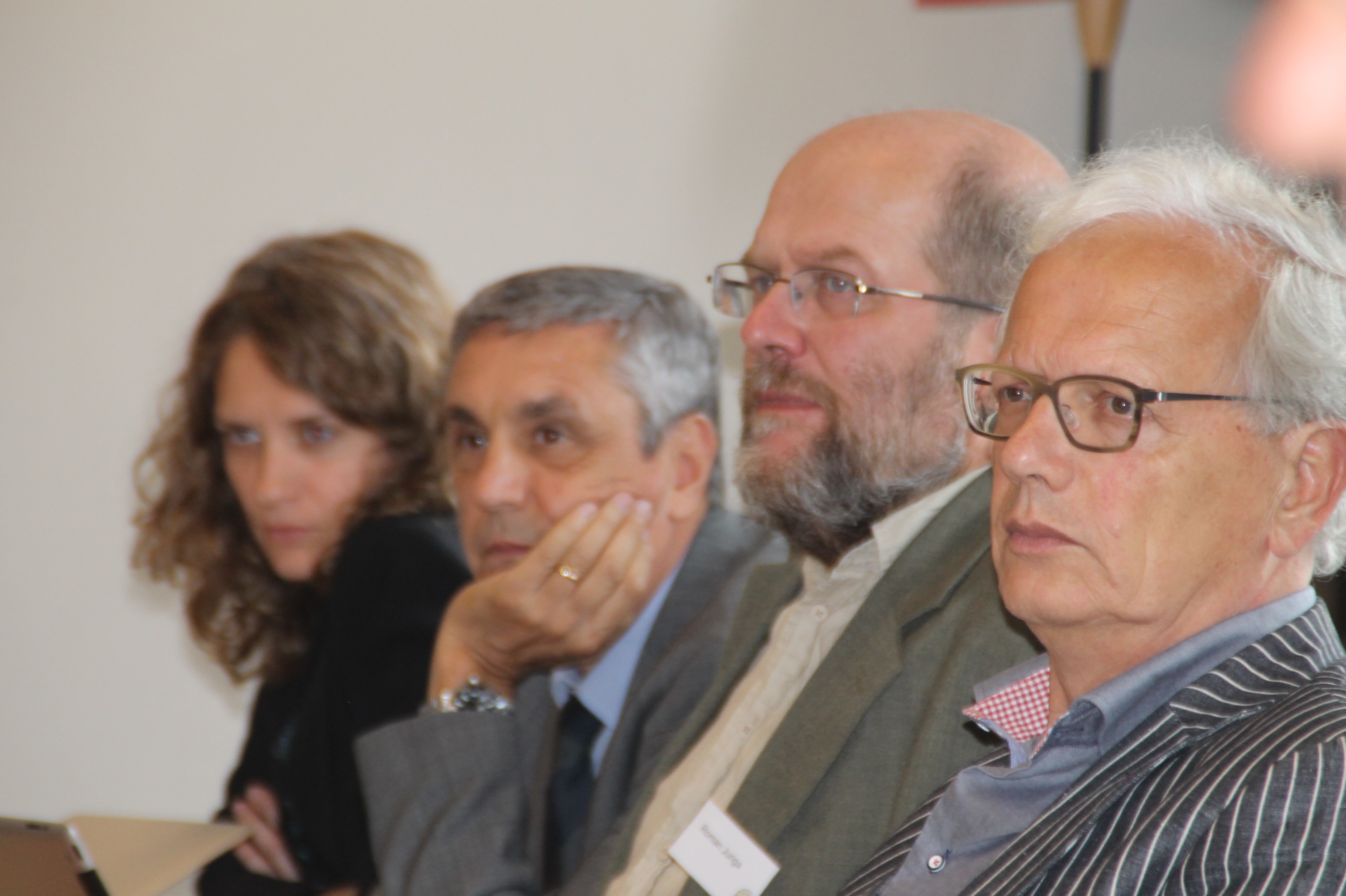
Religion democracy and respectIn the following part of the conference, several members of Oikosnet Europe shared their experiences by giving speeches and presentations. Björn Wallén from the Academy of Lärkkulla gave a presentation about community based learning, Sören Lenz from Liebfrauenberg gave a speech on Laicité – the french way of living together, Angela Berger from Evangelische Akademie in Berlin gave a presentation on Pegida, the the new right wing populism in Germany, Erin Wilson, Director, Centre for Religion, Conflict and the Public Domain at Rijksuniversiteit in Groningen, gave her perspectives on religion in the public sphere, followed up by a speech on the relationship between state and religion in Germany by Sabine Federman from the Academy of Villigst.  On the second day of the conference Aleksei Bodorov from St Andrew´s Biblical Theological Institue in Moscow shared his perspective on religion, cultural identity and democracy in Russia, followed up by Roman Juriga from Pravoslavná akademie Vilémov presenting  the project “Night of Open Churces” and finally Gernot Meier from Evangelische Akademie Baden shared his experices of a religious dialogue project named In the mirror of the other.

All contributions were very valuable in their own right, giving inspiration, concrete examples and good ideas for the future. In the concluding discussion it was very clear that the members of Oikosnet Europe do have a lot in common when it comes to the challenge on how to create a fruitful  dialogue on religion and democracy, based on the freedom of and speech as well as respect for one anothers differencies. That could be a real “Vision for the Future”.

Presentations  from the conferences will be published at the website of Oikosnet Europe later on.

Sofia af Geijerstam, The Sigtuna Foundation


Is your organisation ready for the transnational cooperation? Is it ready for Europe?

Europe-wide Survey: Challenges in the transnational cooperation for organisations in the sector of formal and informal education

euFlag

The transnational cooperation of organisations and institutions within the sector of formal and non-formal education (educational institution and youth organisations) is getting more and more important in a converging Europe. Is your organisation ready for the transnational cooperation? Is it ready for Europe?
Regarding this crucial question Oikosnet Europe sends you a survey. We would appreciate if you could spend 20 minutes of your time to click on the link http://statistics.emcra.eu/index.php/633216/lang-en and if you could answer to the questions anonymously. Thanks a lot for forwarding this survey to your partners as well. Among English there will be five more languages to choose from.
Through the completion of the survey you will be able to learn which challenges your organisation is facing in the context of transnational cooperation. Your answers will help to develop an Online-Self-Assessment-Tool. This tool will assist organisations to check their ability and to optimise to work cross-border in a European context. From mid of 2016 the tool will be available free of charge on the website of the EU-Fundraising Association http://eu-fundraising.eu/ .
For further information about the project see: http://www.emcra.eu/en/projects/europeanisation/
As a gesture of appreciation for your contribution the lead partner emcra (Berlin) offers you to participate at one of their Online Seminars in one particular area of European fundraising. You can choose one seminar in German or English language.
Enjoy the survey!

Rüdiger Noll

ruediger_noll1

Make a world of difference at Corrymeela

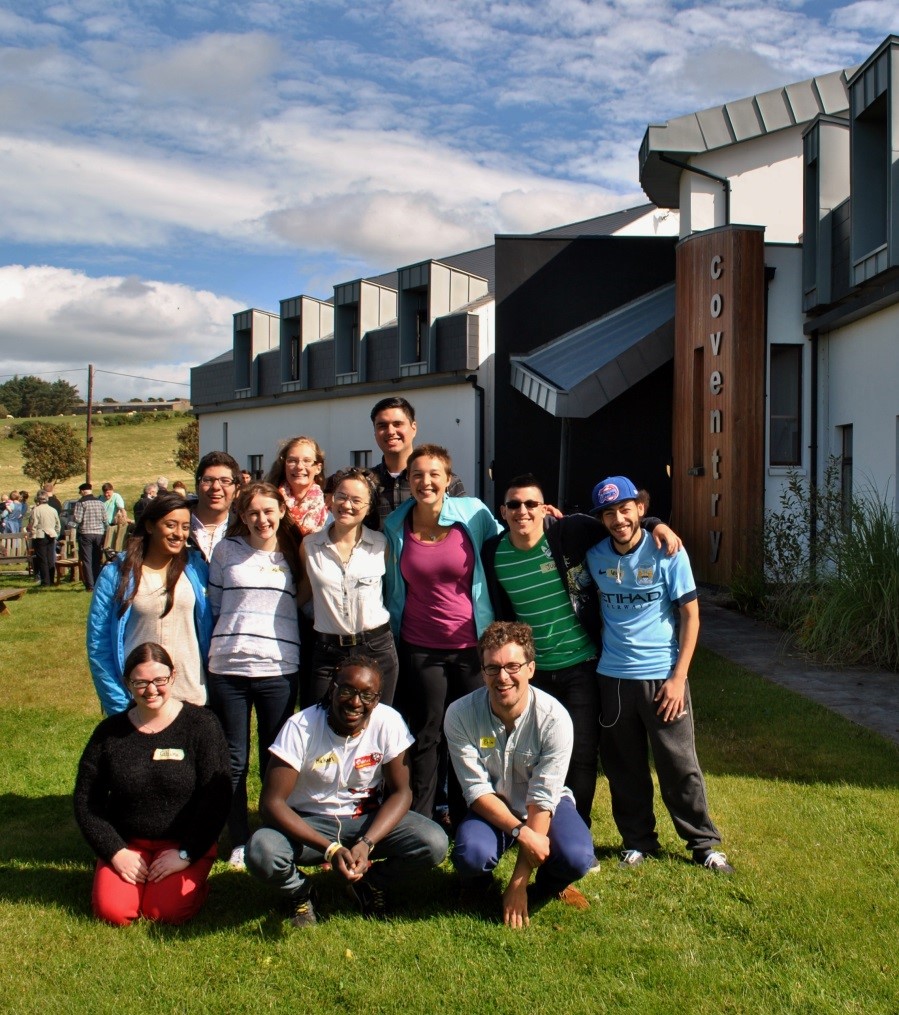
CorrymeelaCan you imagine working for a society whose priorities are justice, mutual respect, the participation of all, concern for the vulnerable and the stranger, stewardship of resources, and care for Creation?

Can you imagine living in one community with people from Northern Ireland, Kenya, the States, the Republic of Ireland, Colombia, Switzerland, Germany, Sweden, Pakistan, and El Salvador?

Can you imagine offering hospitality to thousands of people by cleaning, cooking, leading activities and listening to stories?

If you are interested in becoming a volunteer at our 50-year-old peace and reconciliation centre in Northern Ireland, please visit our website  www.corrymeela.org or contact Aileen aileenfarrell@corrymeela.org and Emily emilygraber@corrymeela.org  for further details.