What is next?

A new president in the USA. What will happen there and how will the outcome of the election affect us? Definitely it is clear that the surprise of the result makes us think about developments in our own continent. How are we dealing with polls? Do we ‘just’ consider the votes and far less the reasons why people have made their choice? Do ‘we’ listen enough to sentiments and arguments of people who seem to loose far more than to gain from globalisation?

Polarisation is not new in our continent. It is already with us as I noticed when I recently listened to some colleagues in the Eastern part of Germany. They told about the careful and intense work they are doing when dealing with political views which remind too much to the period before World War II. What can academies and laity centres do? What are the options in a divided society to work on? I heard that our colleagues carefully support people from all walks of life in this region when they are looking for a society where people want to live well together. It is not so clear, obviously, what everyone is considering ‘living well’. How is this connected with the construct of an ‘identity’? What to do with the sometimes very rude way people behave towards each other? It appeared that each of the colleagues has to find a balance about the tensions they are able to deal with – and where they will withdraw. At which moments is it wise to step back, to not talk anymore, to vote against anything.

Recently in our country a book was published about the processes behind polarisation. In this book – so far only in Dutch – five roles are distinguished in polarisation processes. The first is the role of the pusher, the ones who give their stand very firm, also by hate-speech about the opponent. The second is the role of the joiner, the one who makes a choice between the two pushers and by consequence supports, mostly in a more modest way. The third role is the role of the silent ones: those who want to see both sides, who don’t speak out so far or those who consider the issue indifferent. The fourth role is the bridge-builder – mostly trying to reach out to both pushers. They generally fail, also since the pushers have no interest at all in bridging the gap. The last role is the role of the scapegoat – the person or group which cause the problems according to most others. Both the bridgebuilders and people from the silent group are candidates for this role.

This process can be seen all over Europe. And by consequence it can be one of the tasks of the members of Oikosnet Europe to make the mechanism clear – and to fight the mechanism. In general I think that as soon as a scapegoat is in view, this process is at stake. And hopefully we are found at these spots when working. At these hot spots the hard work has to be done – not just by us but definitely also with us.

Jaap van der Sar

President Oikosnet Europe

Jaap-van-der-Sar


The Arab Europe Citizens’ Dialogue – Save the date!

burqini
Photo: Stella Pictures

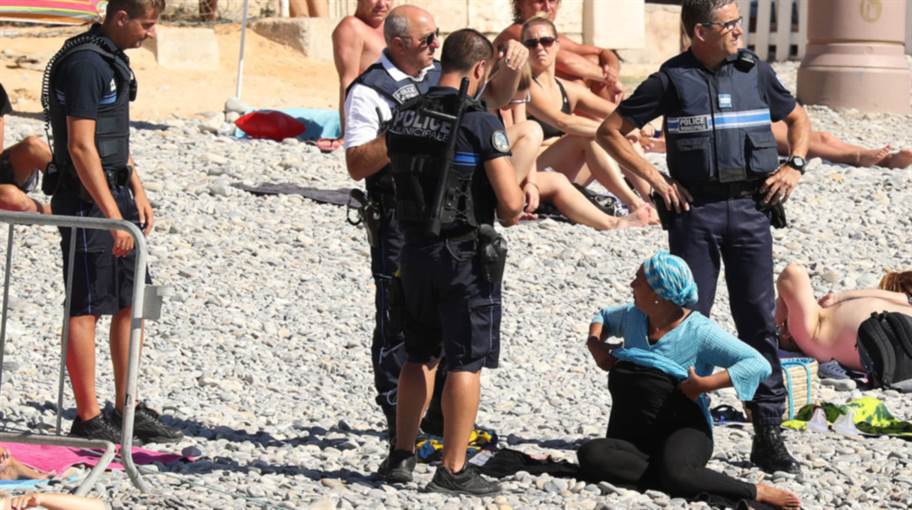
In August, the steering committee of the Arab Europe Citizens’ dialogue met in Cairo to work on the future plans of this dialogue project. Needless to say, this project is highly relevant to most of us in our immediate local context. It also deals with urgent issues in both the European and the Arab context. The Burkini debate in France is just one recent reminder of this. The next dialogue conference will take place at:

*** the Sigtuna Foundation, 9-12 August 2017 ***

I know that this time can coincide with vacation plans for many of our Oikosnet members. But, what can be better than to combine participation in this conference with a vacation in Sweden. Why not spend some time in the beautiful Stockholm archipelago!

I think this conference in Sigtuna will be a vital step in the continuation of this dialogue. My intention is to make it possible for many Oikosnet members to be part of the Sigtuna conference. You will hear more about this later on. Make a note about this conference in your calendar today!

Alf Linderman, Executive Director of the Sigtuna Foundation


Oikosnet in Magdeburg and Wittenberg

Europe and the Reformation, Magdeburg/Germany 6 to 9 November

synod

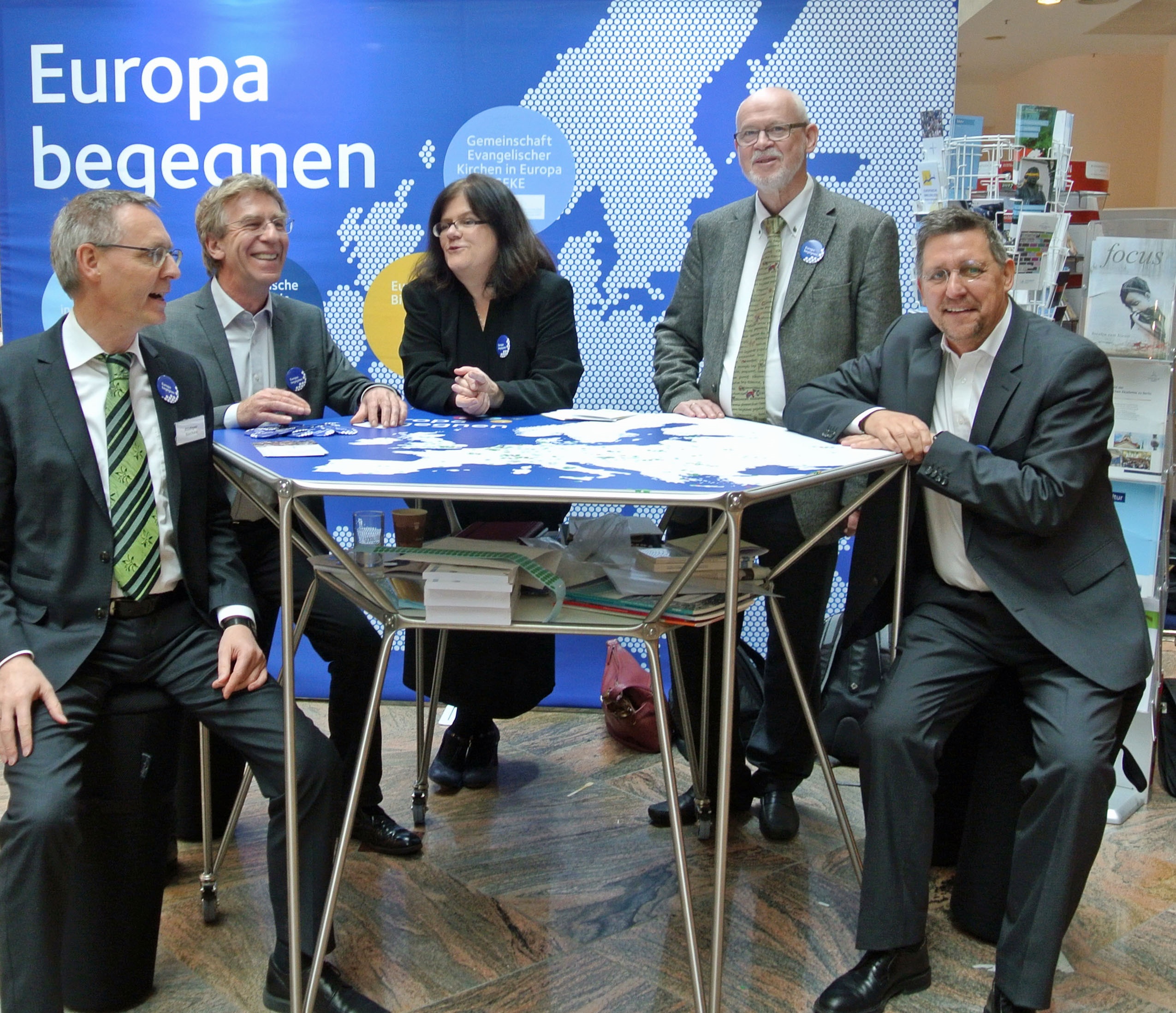
„Europe” is the theme of the Synod of the Evangelical Church in Germany, which will take place from 6 to 9 November in Magdeburg/Germany. Together with the European Bible Dialogues, the Evangelical Academy in Berlin, the Community of Protestant Churches in Europe and the umbrella organization of the German Protestant Academies (EAD), Oikosnet Europe will be part of designing an equipping an information booth at the Synod. The emphasis is not so much on distributing material. “It is more important to initiate good discussions with members of the Synod about our various organisations, which have a common goal: fostering a just, participatory and sustainable Europe,” Rüdiger Sachau, Director of the Evangelical Academy in Berlin told the Oikosnet Annual Conference in Prague. And a booth just in front of the Plenary Hall of the Synod will help to do precisely that. For further information contact the Oikosnet Secretariat or the Executive Secretary

The reformation jubilee in Wittenberg 2017
Equally, the German Academies and the members of Oikosnet Europe will present themselves in 2017, when Wittenberg will be welcoming guests from all over the world for the reformation jubilee. There will be many activities in Wittenberg mainly from May to October 2017. With the Kirchentag in may a “World Exhibition” will open and a huge panoramic view on the reformation will be presented by the artist Assis. There will be many other exhibitions, concerts, worships and events, including weeks under common mottos. Not at least, the sights of the Lutheran Reformation will present themselves fully renovated.

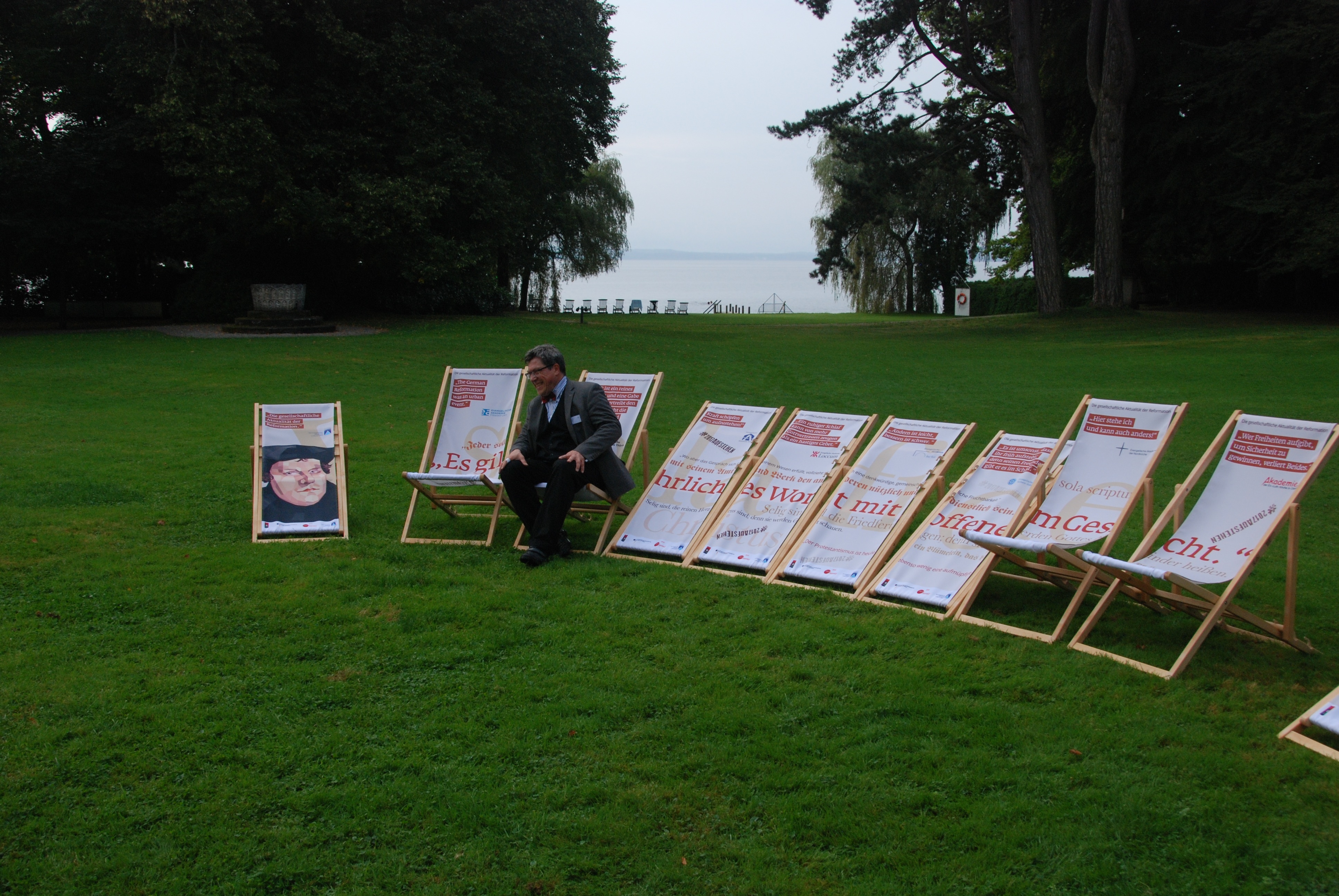
The Evangelical Academy of Sachsen-Anhalt, based a few meters far away from the Castle area in Wittenberg and the castle church, Luther´s burial place, will become one Pavillion of the “World Exhibition”. And it will offer again a possibility for Oikosnet members to be present and to be visible. Following a three-years network project, the German Academies have already produced some relaxing chairs, which capture some of the results of the network project. They also animate to stand-up for the future and gather strength for the reformation(s) ahead. For further information contact the Director of the Evangelical Academy of Sachsen-Anhalt, Friedrich Kramer at kramer@ev-akademie-wittenberg.de

wittenberg

New open training Dialogue for Peaceful Change (DPC)

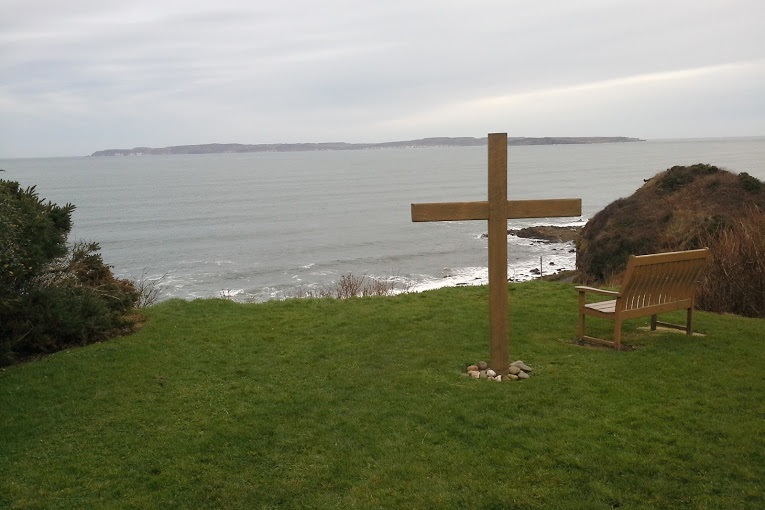
Corrymeela Northern Ireland

What is the story people are telling when they discuss conflicts? Seldom these stories are told by the people in conflict. That is what we learned at the Annual Conference in 2015, in Corrymeela, Northern Ireland. They are experienced in conflicts. And there it became clear that ways towards reconciliation require changes in stories, which are told about ‘the others’.


These elements are part and parcel of the DPC-trainings, which were developed under the umbrella of Oikosnet. Now a new opportunity arises to take part in such a training.

Dates: Mo 28 November – Fri 2 December (evening) 2016
Arrival: 27 November, before dinner
Departure: 3 December, after breakfast
Place: Corrymeela, Ballycastle, No. Ireland

Trainers: Colin Craig and Shona Bell (both Corrymeela) and Jaap van der Sar (Oikos)

Participation fee: Euro 1.150, VAT included.

General information about DPC

Invitation and application form to the conference 

Jaap van der Sar

Oikosnet Europe – two identities in a transitional period

conference-prag
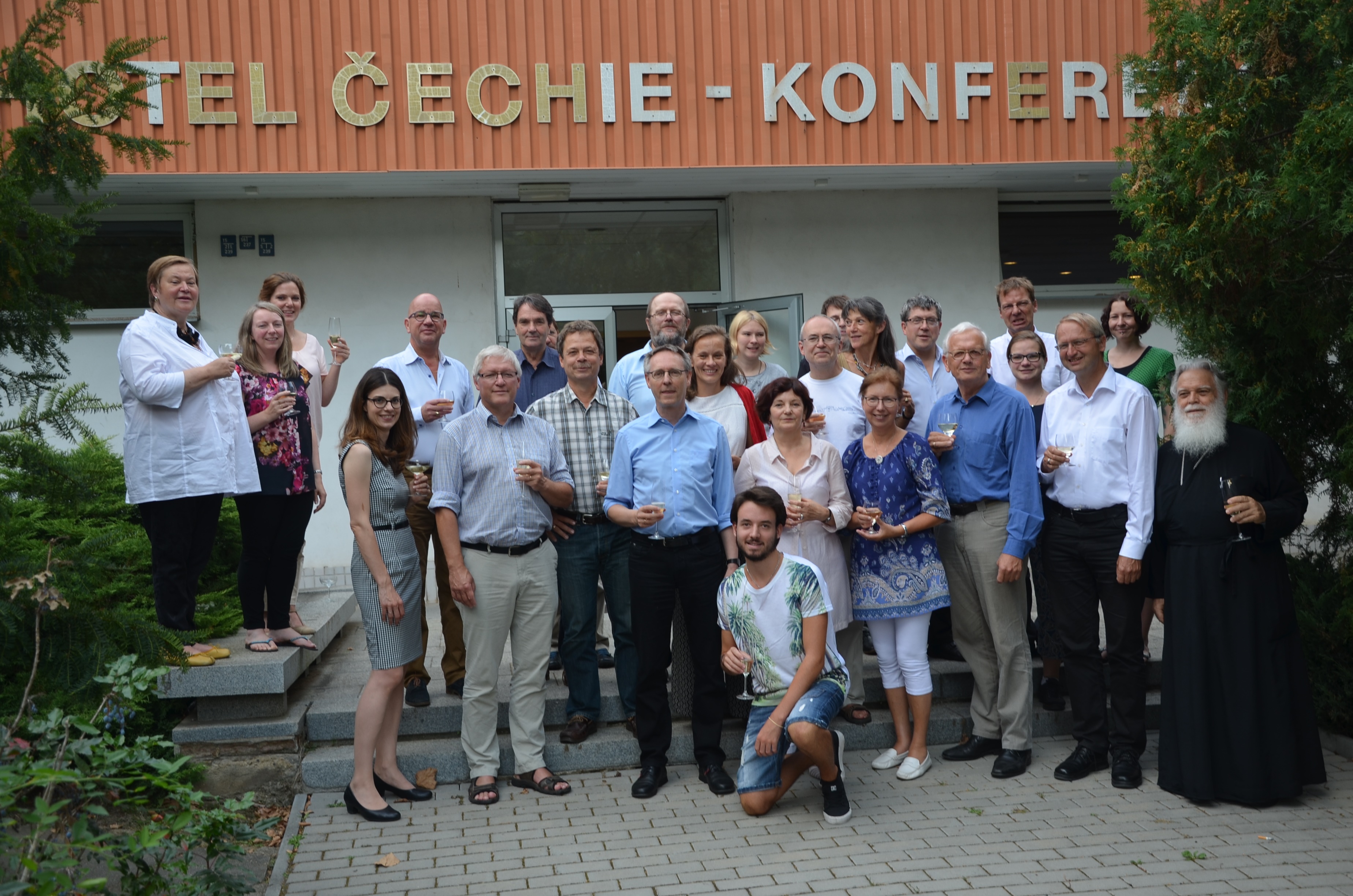
Participants of the Oikosnet Europe Annual Conference  in Prague celebrating the reestablishment of the organisation.

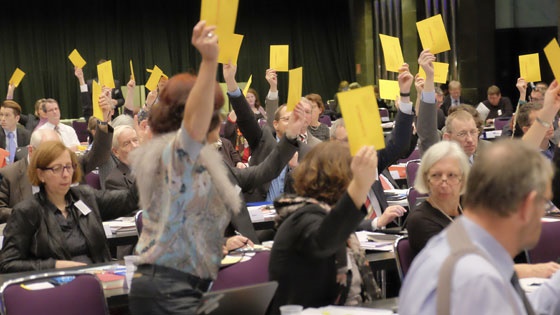
In Prague we had a successful and productive Business Meeting of our Association. Besides the required formalities (reports, budgets, deciding where we meet next year) we also discussed the new identity according to Swedish law of Oikosnet Europe. For good reasons we had an organisational identity according to German law from the beginning in 1955. Last years, in our transition period, we decided to change towards a constituency according to Swedish law. Partly this is done due to the fact that our secretariat is now placed at the Sigtunastiftelsen in Sigtuna, Sweden. In addition to this we felt the need to modernise the formalities in place, especially having in mind how our association has developed over time.

The aims and working plan remained the same for the moment – so there was full support for the establishment of our new Association Oikosnet Europe according to Swedish law. All present (in person) members of the ‘German’ association also registered as founding members of the new ‘Swedish’ association. The inaugural meeting was held under the leadership of the director of Sigtunastiftelsen. The new board has the same persons in place as the ‘old’ one. Yet in a formal sense the members of the ‘old’ association have received the request to subscribe also to the new one. We have already received subscriptions – some more to follow.

What we also noticed: 6 newcomers at the annual conference participated. And they really experienced the power of direct encounters with people who think in a different way. And they are still connected.

Jaap van der Sar

Jaap-van-der-Sar


How to respond? Some thoughts after the Annual conference 2016 

Transition accomplished or mission impossible – Economic developments and civil society. This was the subject of the study day during the 61st Annual Conference of Oikosnet Europe, held in Prague. In itself such a subject is always too broad. The fact that we had very powerful introductions from different angles made it even broader. The role of civil society was the central issue – as it appears to me when looking back now.

We heard from the situation in some Eastern countries in Europe where meetings of activists are monitored by secret services – just by locating all the mobile phones in a very narrow defined area. Or even at a square where more than 50.000 protesters are gathered. Blocking the providers for mobile phone during the protest hours made communication impossible. And afterwards all owner of mobile phones – spotted at the square – were visited at home: Why were you there? And yet, even knowing this, people protested, appeared at the square.

Another example: in the Czech Republic the strength of civil society has been weakened throughout the decades after World War II. 1948 with the new communist regime, 1956 with the troubles in Hungary which affected also the Czech Republic, the Prague Spring 1968, Charta 77 in 1977 and also the short revival after 1989 resulted each time in a wave of emigration, especially from potential leaders, from quite a substantial part of intelligentsia. What about the strength and history of civil society in such a society?

We are not driven by examples – we are more dedicated by the results which can be obtained. During the meeting of the Gender & Justice Network we were informed about a successful activity by the regional government of Baden Württemberg, Germany. Through a committed minister president and through the support of churches it appeared to be possible to find, transport and welcome more than 1.000 battered women with their children from Yazidi groups in Iraq. They were welcomed, housed and supported in their different ways to start a new life. Civil society was active around them.

During the Annual Conference we had an input from Mr. Daniel Stech, civil servant at the Foreign Office of the Czech Republic.  He mentioned some helping ideas for civil society groups. Among them:

  • Civil society will always be a minority. Accept that as a fact.
  • Create places where you stimulate the imagination
  • Create places where you enable face to face meetings
  • Apply an open door policy. This enables enrichment from unexpected angles.
  • When looking for opportunities to meet with others, take away some of the obvious barriers in places – like cars.
  • Organise careful counter attacks against simplified narratives.

In my view this list is encouraging. It is a list which contains realistic options. And also, it is a list which to a high degree characterises the work the members of Oikosnet Europe at the moment.  And as a last remark: this was what happened at – again – this Annual Conference.

Besides that we were also productive in other ways. See other input in this newsletter.

All in all is was worth getting to this Annual Conference. Next year we meet in Beugen, Germany, from 6 to 10 September.
Jaap-van-der-Sar

Jaap van der Sar president Oikosnet Europe
Oikosnet Europe successfully re-established

conference-prag

A new ecumenical network of academies and laity centres was founded in Prague on Saturday, 10th September 2016. Oikosnet Europe is based in Sigtuna, Sweden. Jaap van der Sar of Stichting Oikos in the Netherlands is president of Oikosnet Europe.  Marielisa von Thadden (Protestant Academy Bad Boll, Germany), was elected vice-president.  Rüdiger Noll (The Protestant Academies in Germany, EAD) is executive secretary of the international network. Nicola Murray, The Corrymeela Community, Northern Ireland, was elected treasurer. Oikosnet Europe ideell förening (non-profit association),  is the official Swedish name of the network, and on its founding day had 17 members from different European  countries, including France, Russia, Italy, Finland, Czech Republic, Slovakia, Switzerland, Germany and Norway. Other academies and centres are expected to join soon. Many have been members of the preceding organisations.

Oikosnet is an ecumenical organisation. Among its members are almost all of the 17 Protestant Academies in Germany. Furthermore, orthodox centres from Greece, Russia and Poland belong to the network. In the European network, Norway is represented by its umbrella organisation, as in Norway there are not only Lutheran, but also some Catholic academies involved – at present a total of more than 70. The number has been continuously growing over the past years by two to three centres per year. Whereas in Norway the organisational and financial framework of the academies is taken care of by the church, academies and centres in other countries depend heavily on donations, project funding, admission fees and immense personal commitment. The staff of the Italian centre “Agape”, for example, largely forgo salary, in the Czech Republic the director of Vilémov/Javornik is currently trying to acquire basic equipment for the centre.

As different as the centres and academies might be, they are all joined in their belief that as Christians we need to act out our responsibility for society and living together peacefully. Conversation, encounters and educational programmes are an important means to achieve this.

Picture: Participants of the Oikosnet annual conference in Prague toasting to the re-establishment of the association according to Swedish law.


Arab-European Citizens’ Dialogue: the continuation

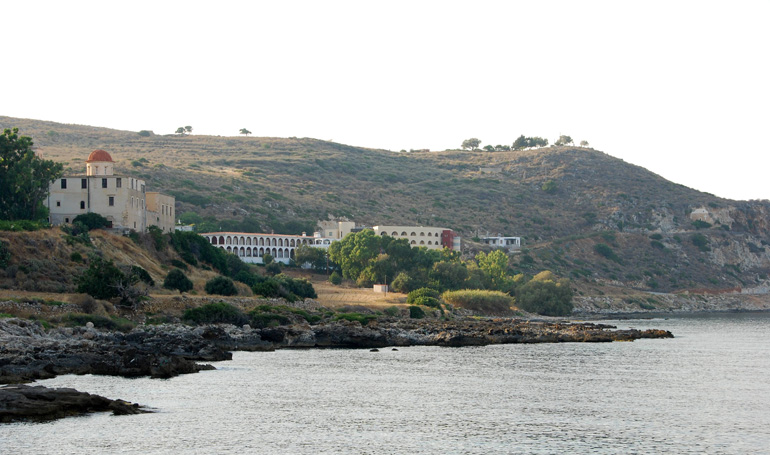
OACThe Arab-European Citizens’ Dialogue continues. The 5th Consultation, under the title “Societies in Transition: Active Citizenship – Where can it make a difference?” took place in the Orthodox Academy of Crete, Wednesday to Saturday 9- 12 March 2016. The conference was organized jointly by the Coptic Evangelical Organization for Social Services (CEOSS), Oikosnet Europe, the Sigtuna Foundation and the Orthodox Academy of Crete. Close to forty participants took part in this event.

After the previous series of Dialogue Conferences, the Arab-European Citizens’ Dialogue has gone through a period of reflection and restructuring. Recent events, both in Europe and in the Arab world, vividly illustrate the need to continue this dialogue.

It is now Oikosnet Europe that has become the European partner that work together with CEOSS in Egypt. In this dialogue effort, CEOSS and Oikosnet Europe also work together with a number of other partners in Europe and in the MENA region.

A concept note for the Dialogue is presently under discussion. In addition, a new International Steering Committee has been established. It is in the name of the parent organizations as well as on behalf of the International Steering Committee that we are inviting for the conference in Crete.

For more information, please contact Rüdiger Noll (rudiger@rudigernoll.eu) or Alf Linderman (alf.linderman@sigtunastiftelsen.se).

Preparing for the Reformation Jubilee 2017

Academy of Tutzing 15-17 September 2016
For three years now the German Protestant Academies have engaged together in a network project on the resonance of the reformation for present societies. The project focused on the economy (work life), culture and media. This project comes to an end in 2016 with a summarizing consultation in the Academy of Tutzing from 15-17 September 2016. Speakers include the Chairperson of the EKD Council, Bishop Heinrich Bedford-Strohm, the Chaiperson of the German roman-catholic Bishops’ Conference, Kardinal Marx, Archbishop Tabo Makgoba as well as representatives from other religions and from politics and society. The Conference will provide simultaneous translation in German and English. Further information can be obtained soon from the website of the Academy of Tutzing (www.ev-akademie-tutzing.de) or from noll@evangelische-akademien.de.


2016 – an “annus horribilies” for the EU

ruediger_noll1Europe and especially the European Union are in turmoil more than ever before. Already some years ago the President of the European Commission, Jose Manuel Barroso, spoke about the biggest crisis of the Union in its history. And signs got worse.

The economic, financial or dept crisis in Europe (however one might want to call it) is far from being over. There might be fewer emergency meetings of the European Council than in the last years, but the austerity measures still lead to widening gap between rich and the poor within many societies and an unprecedented unemployment in many countries, especially effecting young people. And due to the austerity measures it is almost impossible for countries like Spain and Greece to move towards a sustainable economic growth.

The waves of refugees coming or wanting to come to Europe just shows how little Europe contributes with a coherent approach to the root causes of migration and how little there is of a Common European Foreign and Security Policy as well as of a coherent action plan in the area of a global and sustainable development. In the Arab-European Citizens’ Dialogue, which had its last meeting in March at the Orthodox Academy in Crete, our Arab partners indicted very clearly that they do expected more of a common European response and support for their situation. And in addition: the way, the refugee crisis is handled within Europe also shows that “solidarity” is not the guiding principle within the continent.

And then there is the possibility of a “Brexit”, of the United Kingdom leaving the EU. Whatever the result of the British referendum will be, it will change the European Union. The “ever closer Union” mentioned as one commitments of the EU Member States in the Preamble of the Lisbon Treaty is no longer a common aim. I am surprised to how easily certain circles have adjusted to a Europe of different speeds.

2016 an “annus horribilies” for the EU and, even more important, for the European project of peace, reconciliation, prosperity and justice? – No wonder that the trust of many people in the institutions like the EU and in European leaders is diminishing. Thus far, the EU has not been a row model for an inclusive decision-making, but now even more decisions are taken behind closed doors between member states, rather than strengthening the democratically legitimized institutions such as the European Parliament. The impact has shifted from the community institutions to the member states again, from transparency and participation to mere crisis management.

“What shall’s,” many people might say. The EU is not to be identified with the European integration project itself and wasn’t it that the European project grew and got new impulses through crisis situations? Yes, this was true. But do such mechanisms out of necessity contribute to a positive vision for the European project with which the people can identify themselves? And in addition, the accumulation of present challenges for the European project seems to also indicate that the “old” mechanisms do not work anymore. The European project itself is at stake. The self-interests of EU member states seem to win over and against a common vision and common interests. The management and administration of challenges wins over and against forward-looking solutions, based on the values of a common European home.

At this stage, I am reminded of a moment at the last Annual Conference of Oikosnet Europe in Corrymeela, when friends and experts from Northern Ireland explained their approach to the present state of affairs in what is or was known as the Northern Irish conflict or troubles. “We know exactly what the conflict is about. The stakeholders and their respective interests are clearly identified? We know what we ought to do. But still there is no sustainable solution to the conflict between the different communities in our country. Unless we manage to change the overall narrative towards a positive common vision, there will be no sustainable solution”, one of the speakers said.

Despite a considerable resistance against the discourse about a new narrative for the European project in some quarters, I still take it that the Northern Irish experience is also true for Europe. As long as there is no vision for the European project, it will remain difficult to overcome a selfish attitude of European states and a business-as-usual mentality. And a vision, people can identify with, must be a positive one. Being afraid of other emerging economic powers, such as the BRIC states, will not create positive energy. What the people are looking forward is a just, participatory and sustainable Europe in a global context (quoting the terminology of a former programme of the World Council of Churches). This is what needs to be translated into an inspiring narrative and real politics for the sake of the European project as well as for the sake of the European Union. To this the members of Oikosnet Europe have a contribution to make.

Rüdiger Noll, Executive Secretary of Oikosnet Europe